Welcome to
Your Personalized Ring
This experience will be tailored just for one person.
Let's start by telling us who this ring is for.
 IGI Certified Diamonds
Carbon Positive by Design
Bonded Lifetime Promise
100 Day Returns
IGI Certified Diamonds
Carbon Positive by Design
Bonded Lifetime Promise
100 Day Returns
 RoundMost Popular & Maximum Sparkle
 OvalElegant & Elongating
 PearUnique & Graceful
 EmeraldSophisticated & Hall of Mirrors
 RadiantBrilliant & Rectangle
 CushionSoft & Romantic
 PrincessModern Square
 SquareBalanced & Modern Geometry
 HeartRomantic Symbol
 MarquiseDramatic Statement
 AsscherArt Deco & Elegance
 BaguetteArchitectural & Minimal Lines
 Elongated CushionRomantic & Elongating
 Elongated HexagonLinear & Graphic Elegance
 Elongated RadiantRectangular & Brilliant Sparkle
 HexagonGeometric & Distinctive
Mixed
HexagonGeometric & Distinctive
Mixed
 TrillionSculptural & Modern Triangle
 950 PlatinumPremium & Durable
 18K Rose GoldRomantic & Trendy
 18K White GoldModern & Bright
 18K Yellow GoldWarm & Classic
 Thin, 1.2 mm
Delicate & Modern
Thin, 1.2 mm
Delicate & Modern
 Medium, 1.4 mm
Balanced & Classic
Our recommendation
Medium, 1.4 mm
Balanced & Classic
Our recommendation
 Bold, 1.6 mm
Statement & Substantial
Bold, 1.6 mm
Statement & Substantial
 Classic / Straight
Clean lines & Timeless appeal
Our recommendation
Classic / Straight
Clean lines & Timeless appeal
Our recommendation
 Rounded
Comfortable & Smooth edges
Rounded
Comfortable & Smooth edges
 Diamond Band
Small diamonds covering the band
Diamond Band
Small diamonds covering the band
This is our recommended tier for 99% of customers.
- Colour: D-E
- Clarity: FL, IF, or VVS1
- Cut: Ideal or Excellent
- Polish: Ideal or Excellent
- Symmetry: Ideal or Excellent
Virtually perfect. Colourless to the eye, no visible inclusions under any normal viewing conditions, and cut to exacting proportions. The only imperfections — if they can be called that — require a trained gemologist and a microscope to find.
This tier is for customers who want to know with certainty that their stone sits at the absolute ceiling of what's measurable — about ~0.0002% (1 in 600,000; roughly 60 natural stones per year globally) of natural stones or ~0.09% (1 in 1,100; roughly 14,000 lab-grown stones per year) meet this standard.
- Colour: D
- Clarity: FL (Flawless)
- Cut: Ideal
- Polish: Ideal
- Symmetry: Ideal
The highest achievable grade in every single dimension. D colour, Flawless clarity, Ideal cut, Ideal polish, Ideal symmetry. There is no higher grade. This is as perfect as a diamond can be measured to be.
Setting: —
Shape: —
Metal: —
Band: —
Diamond: —
Size: —
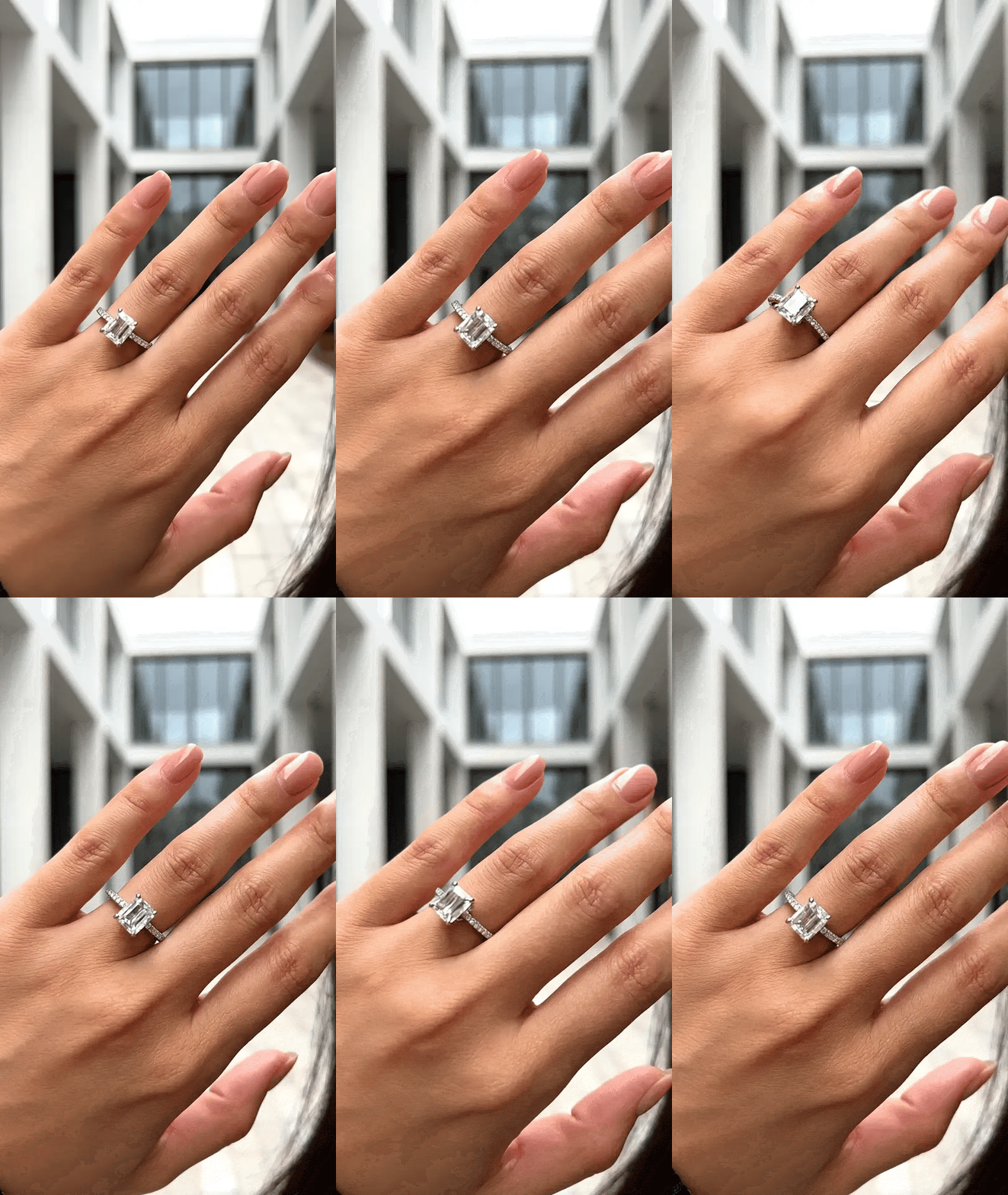
Solitaire
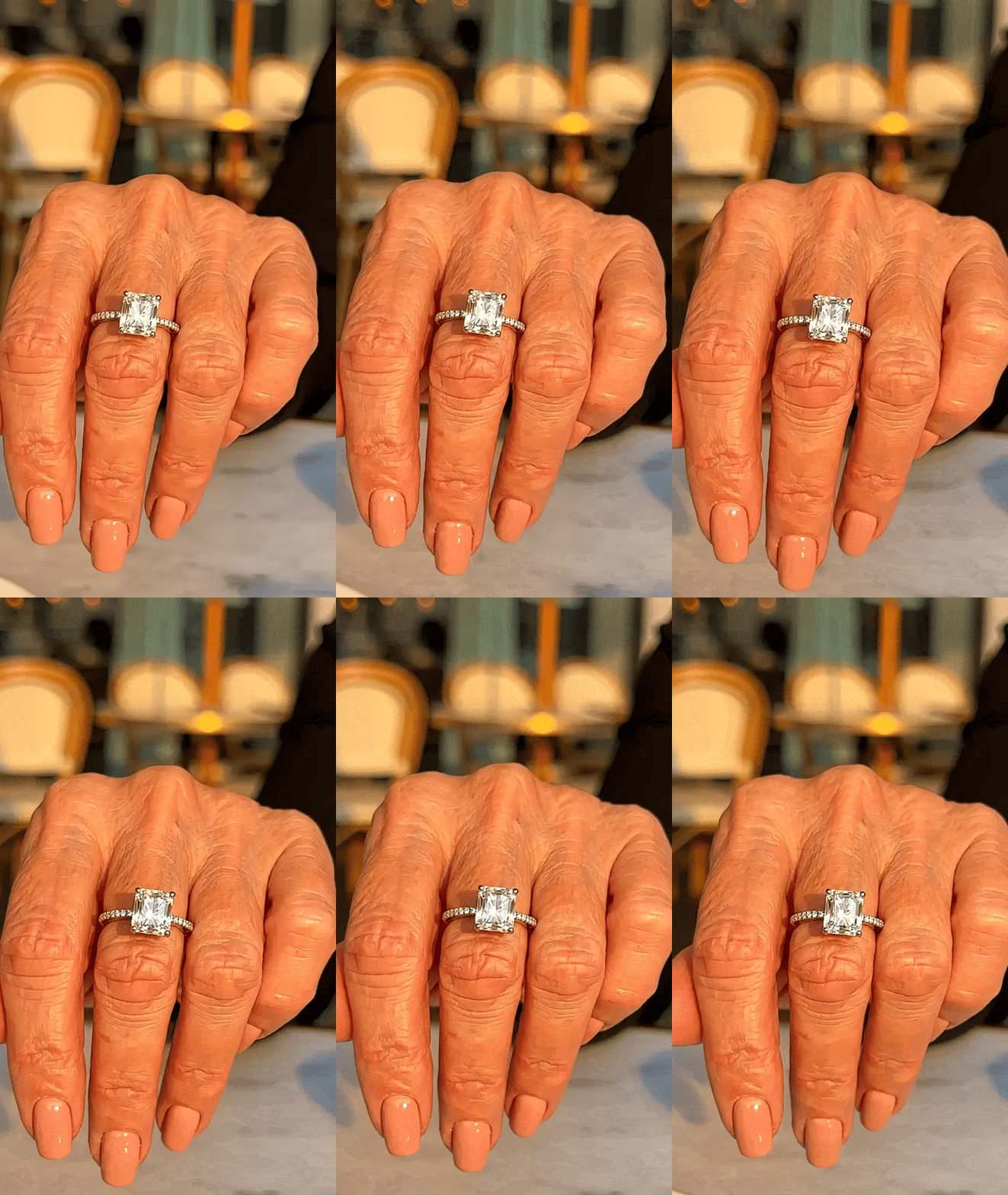
Solitaire
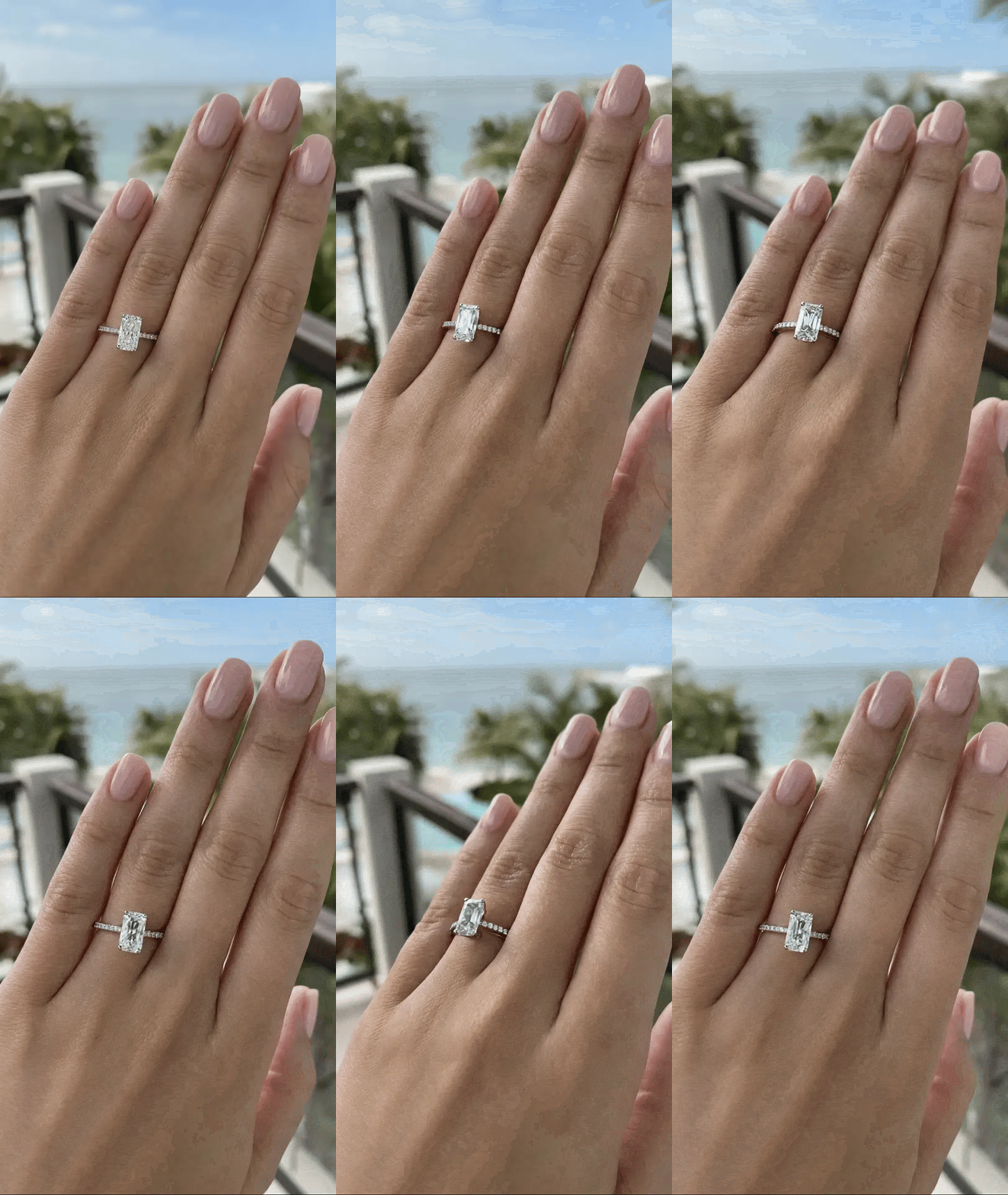
Solitaire

Solitaire
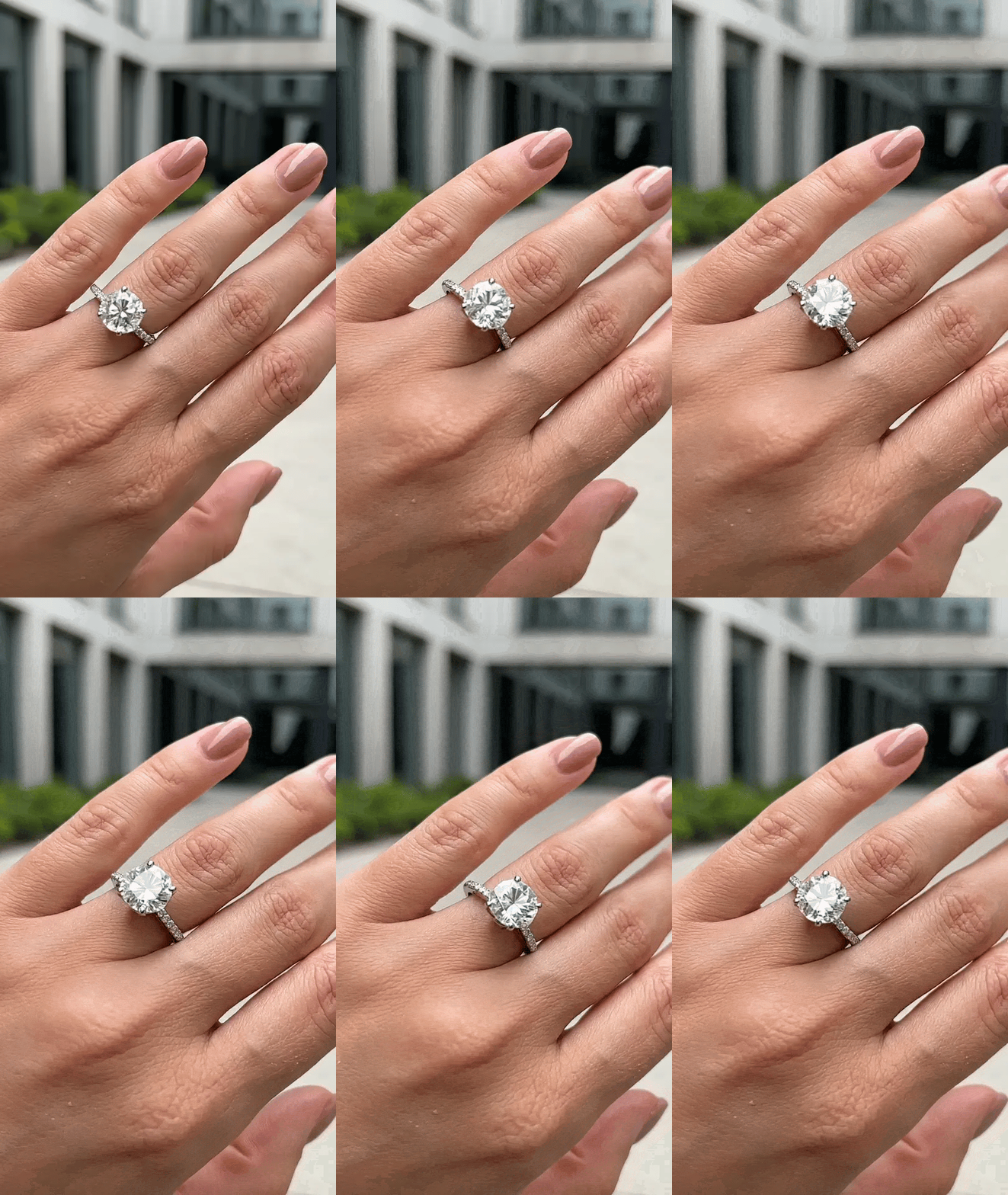
Solitaire
Solitaire
Solitaire
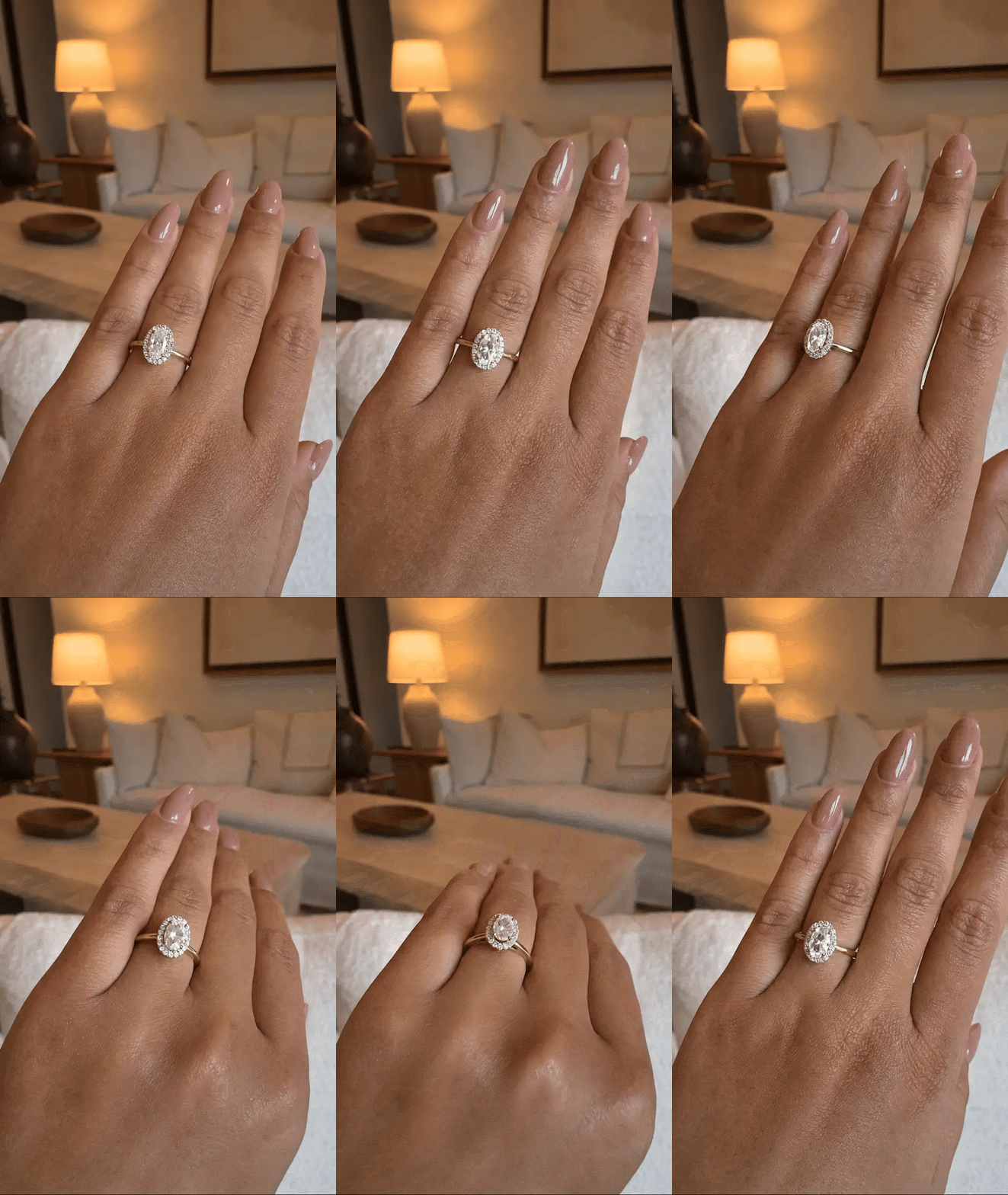
Halo
Halo
Halo
Halo
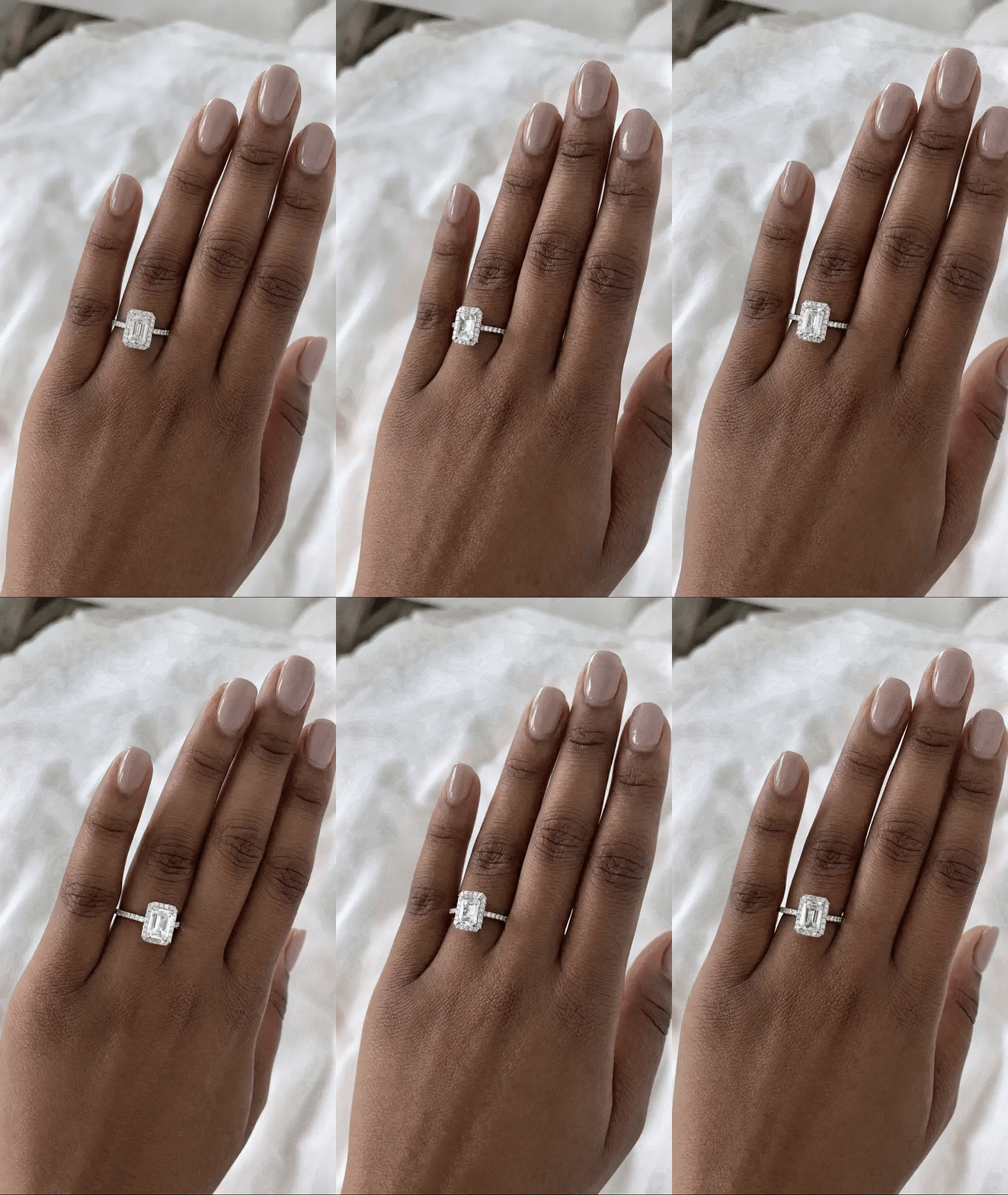
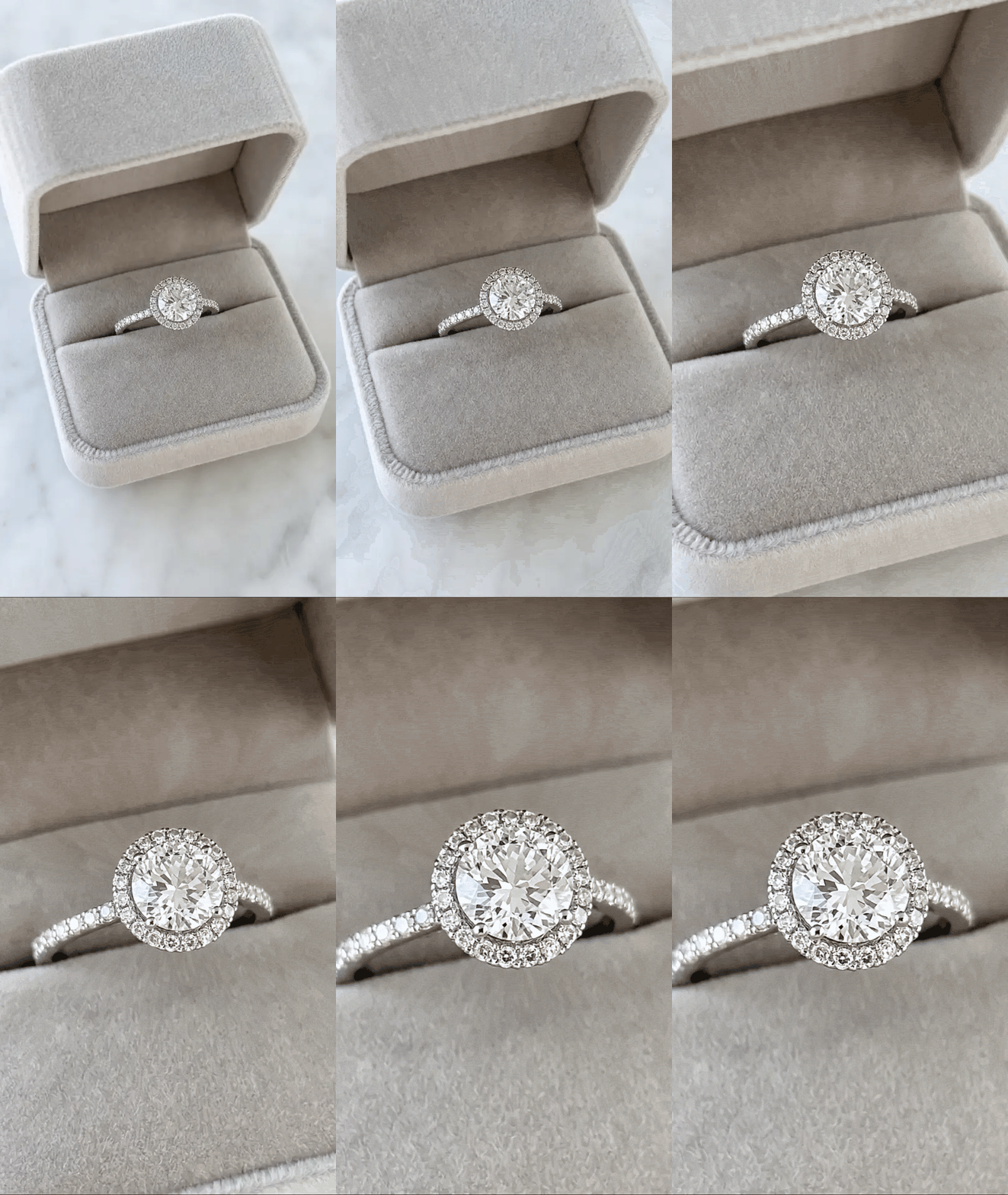
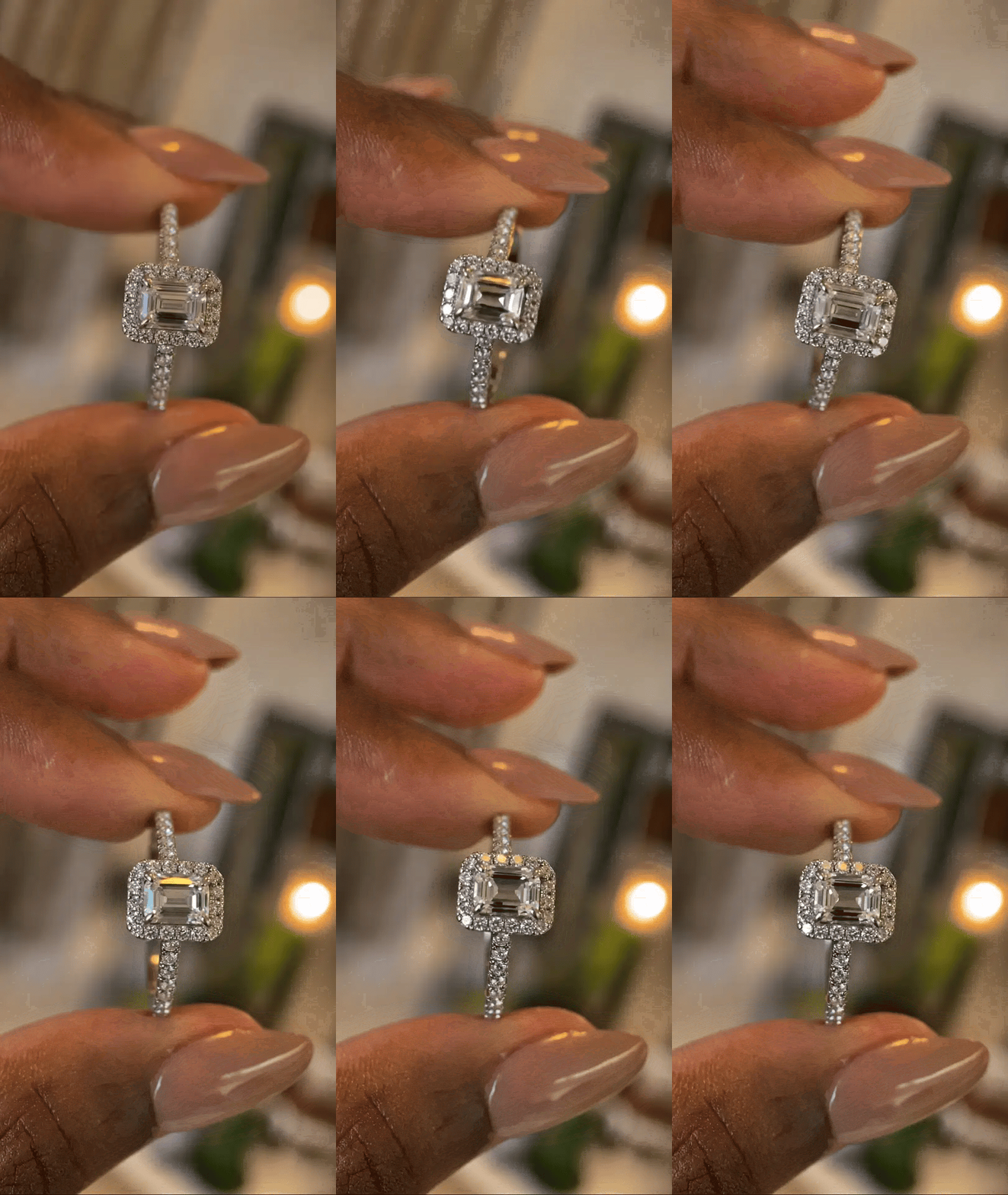
Halo
Halo

Hidden Halo
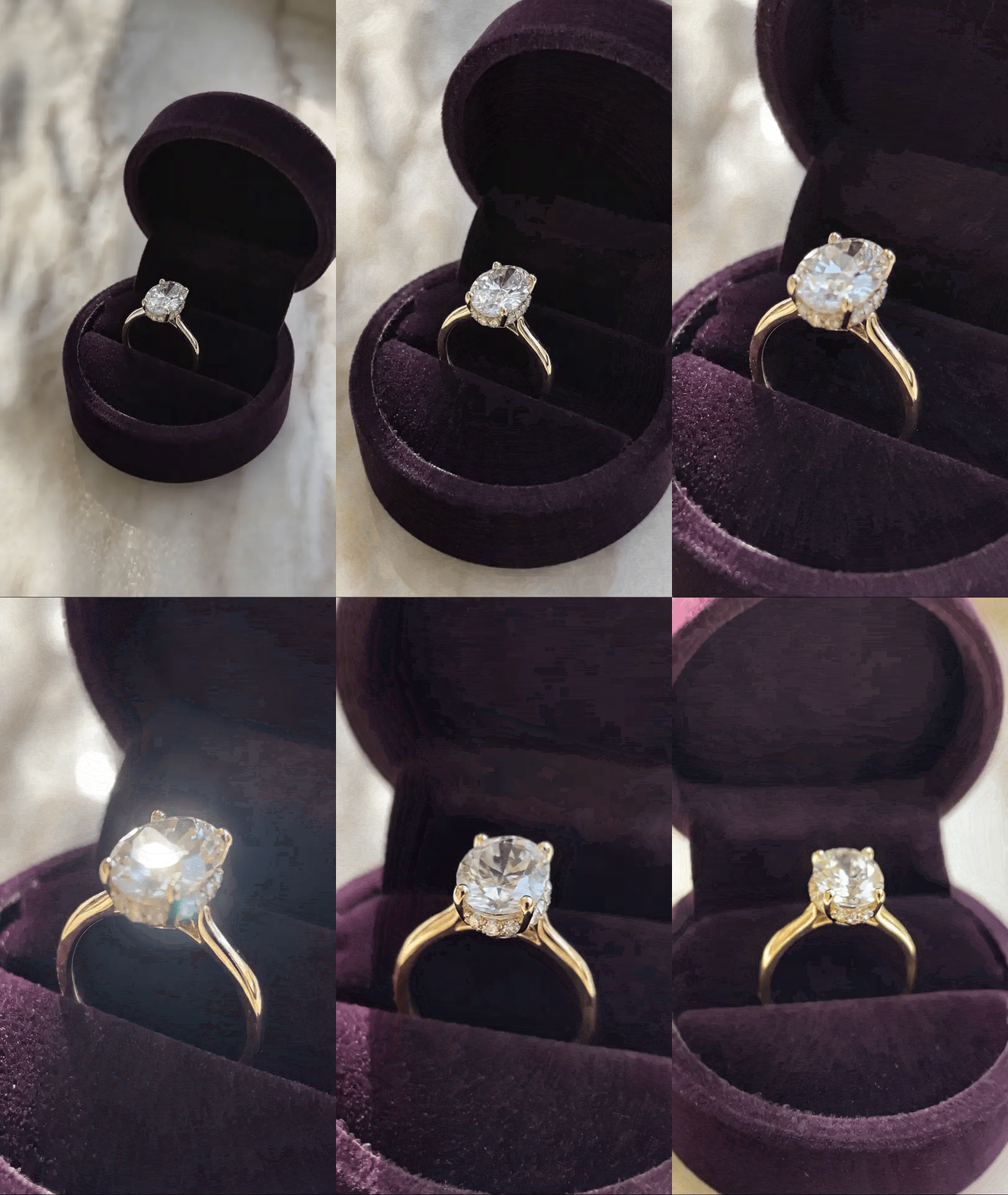
Hidden Halo
Bezel
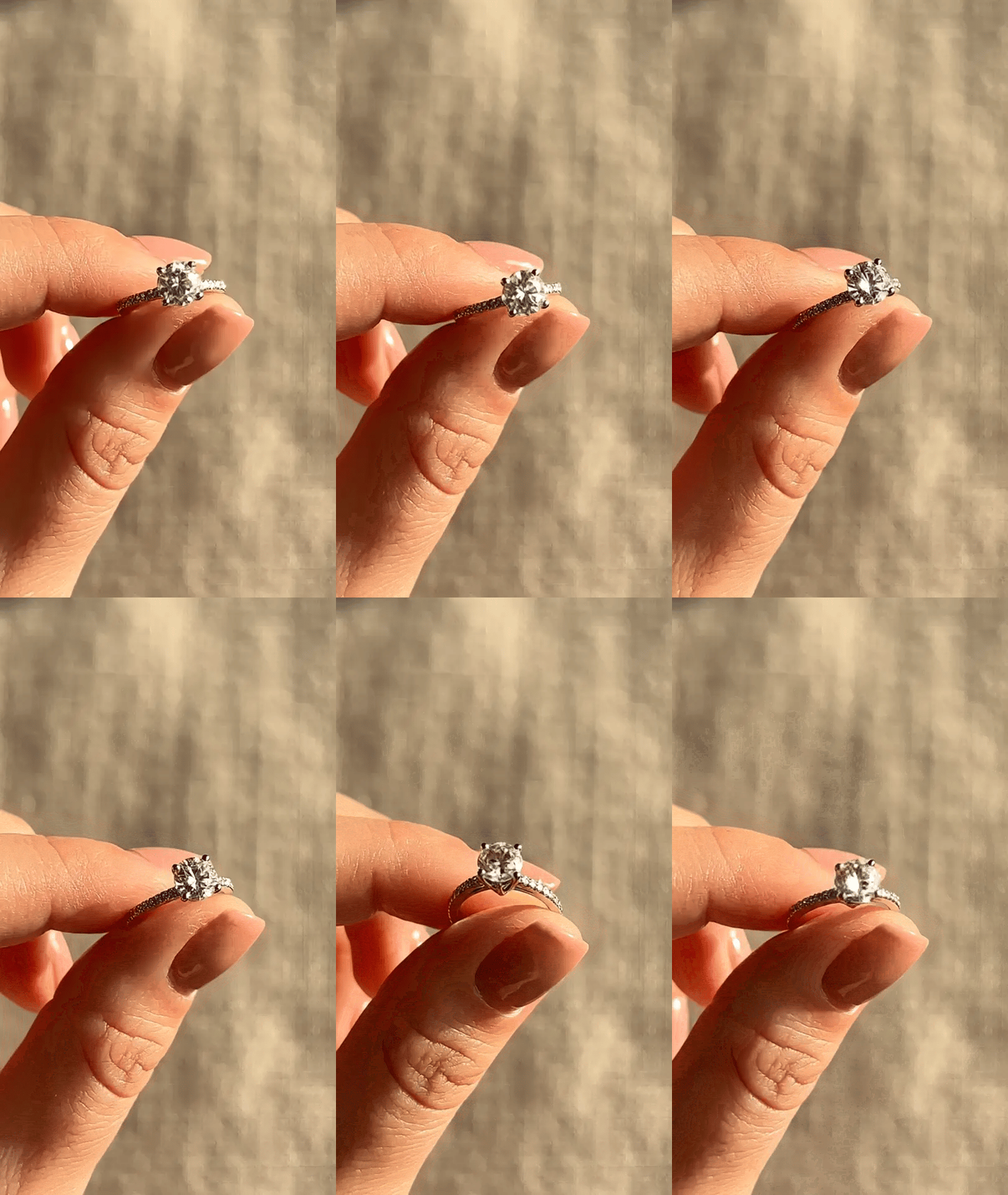
Round Brilliant
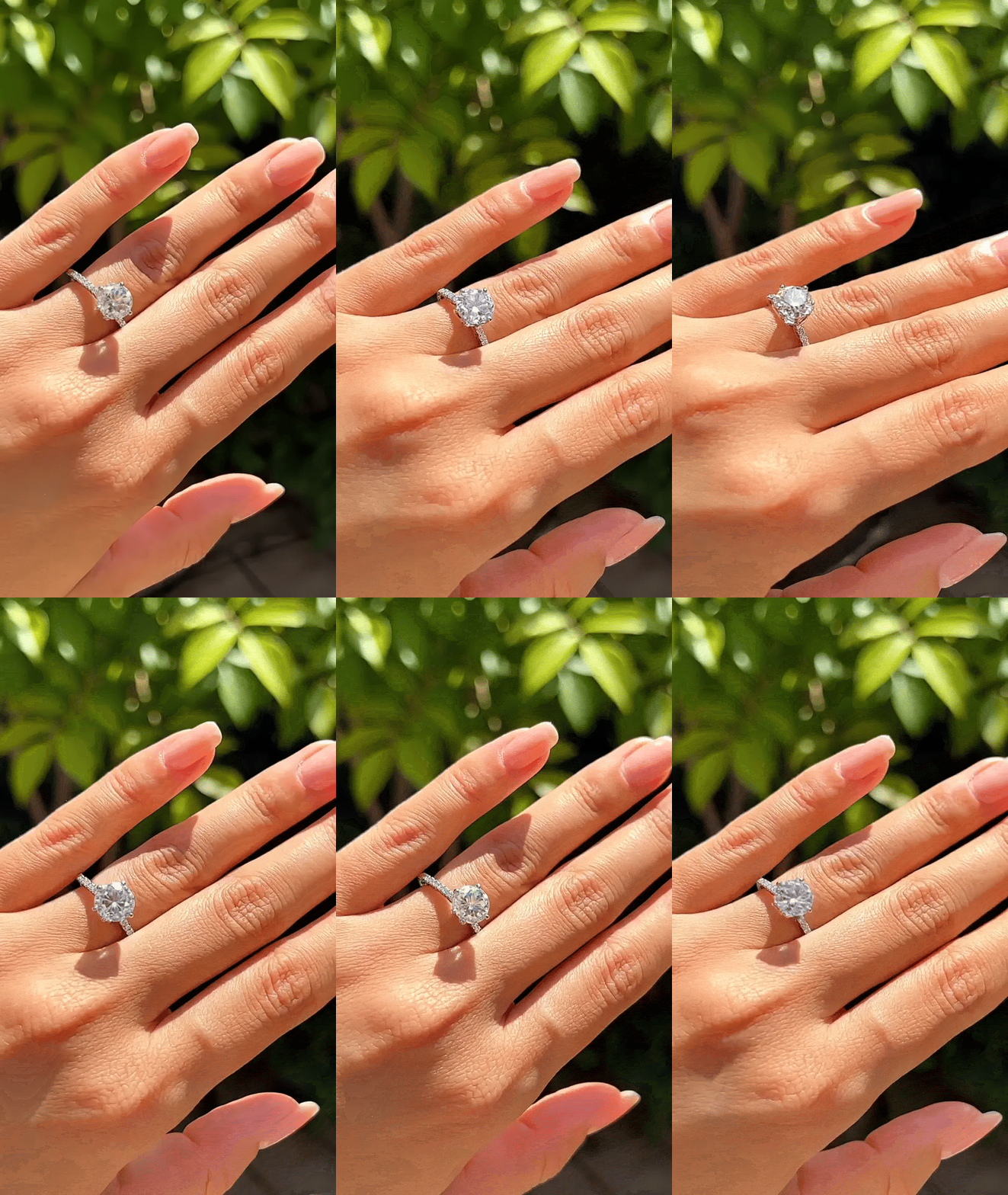
Round Brilliant
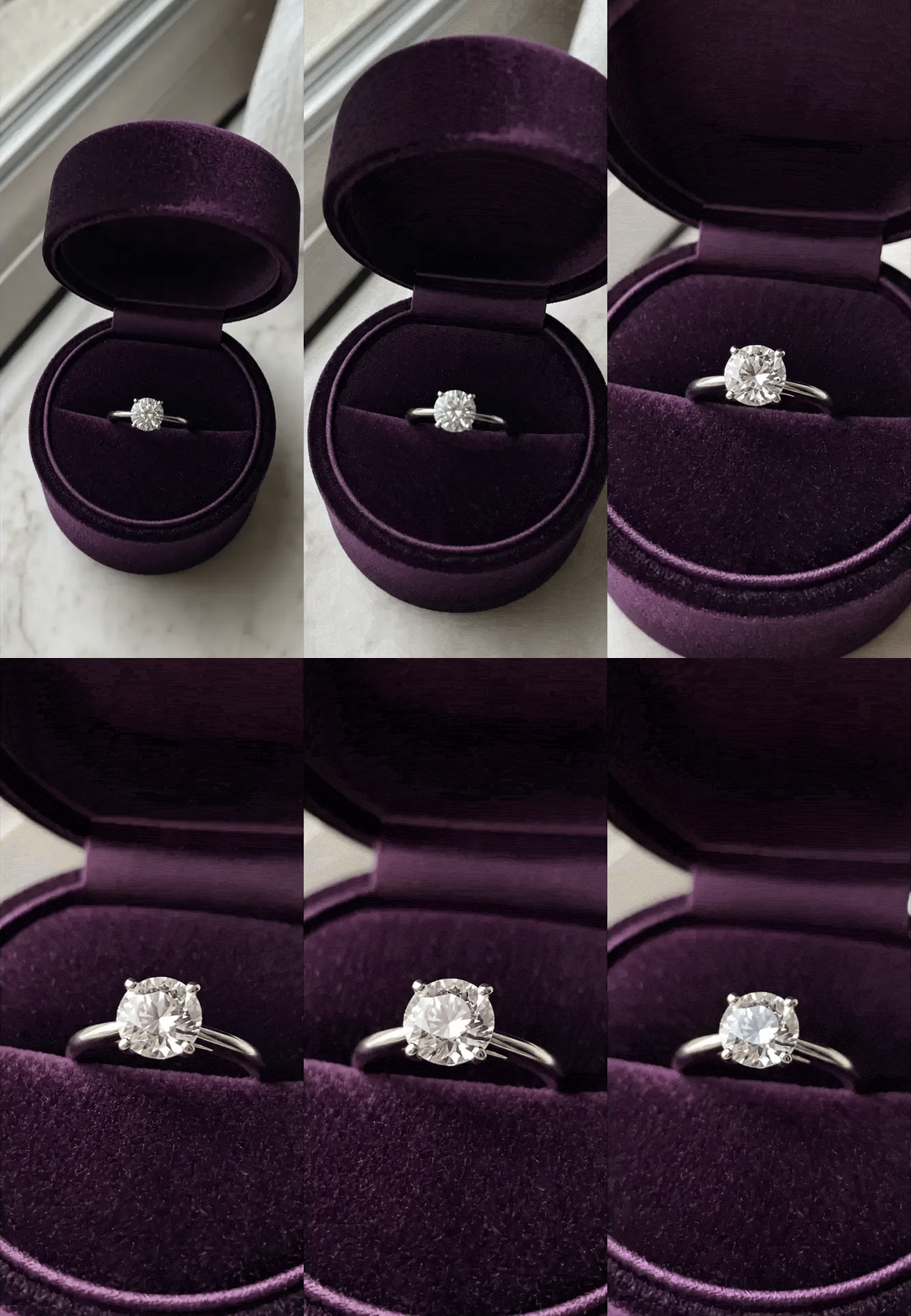
Round Brilliant
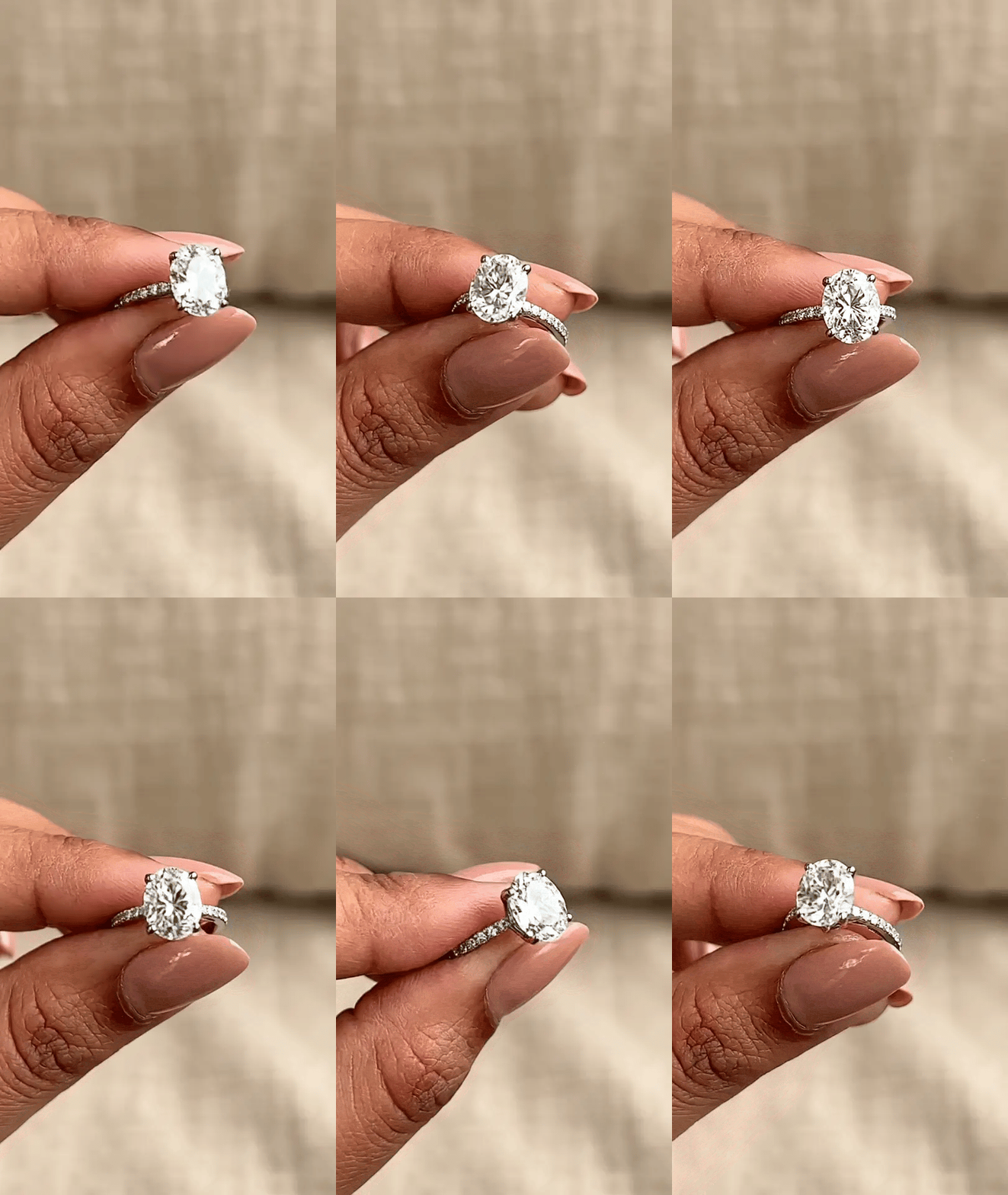
Oval
Oval
Oval
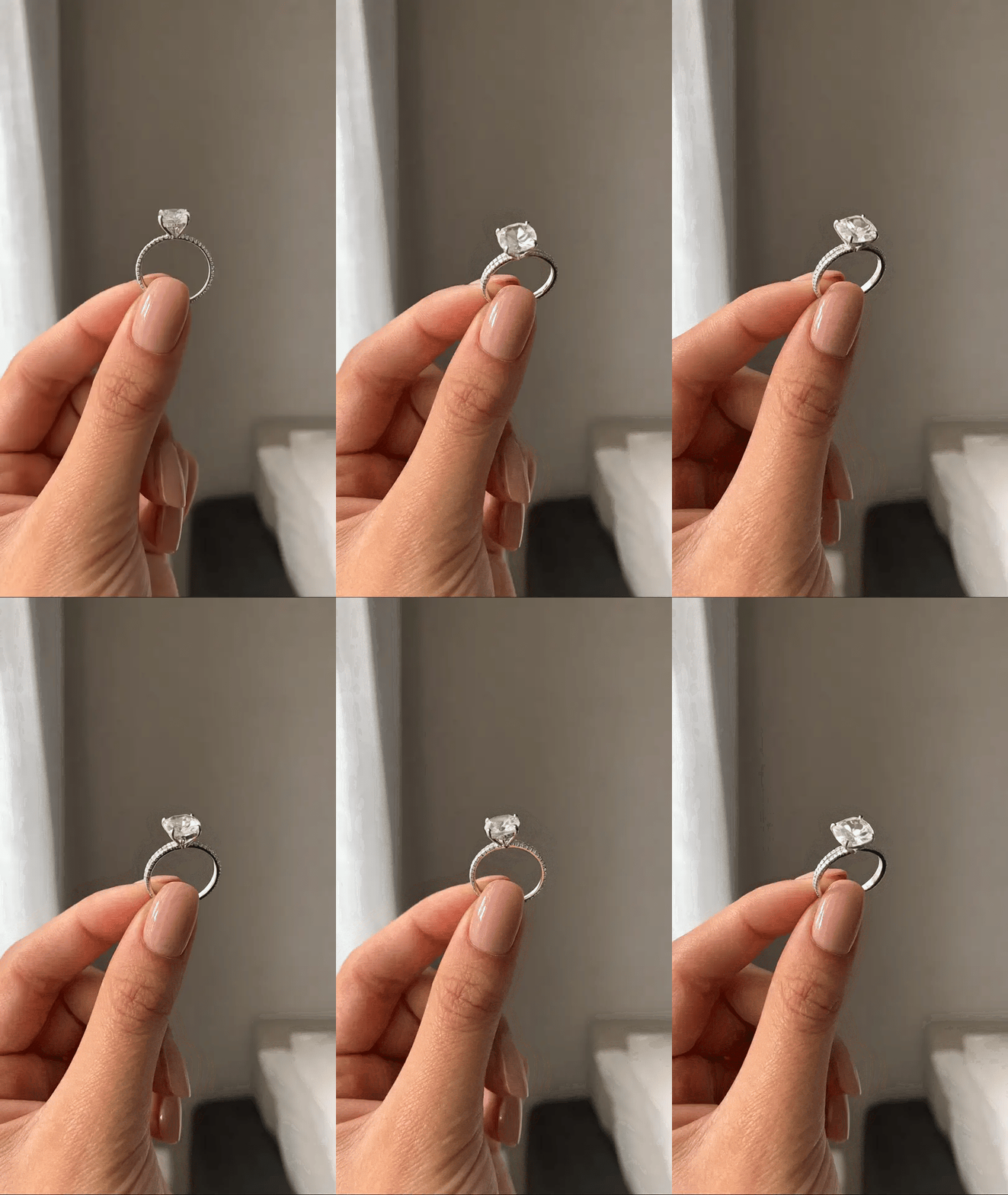
Cushion
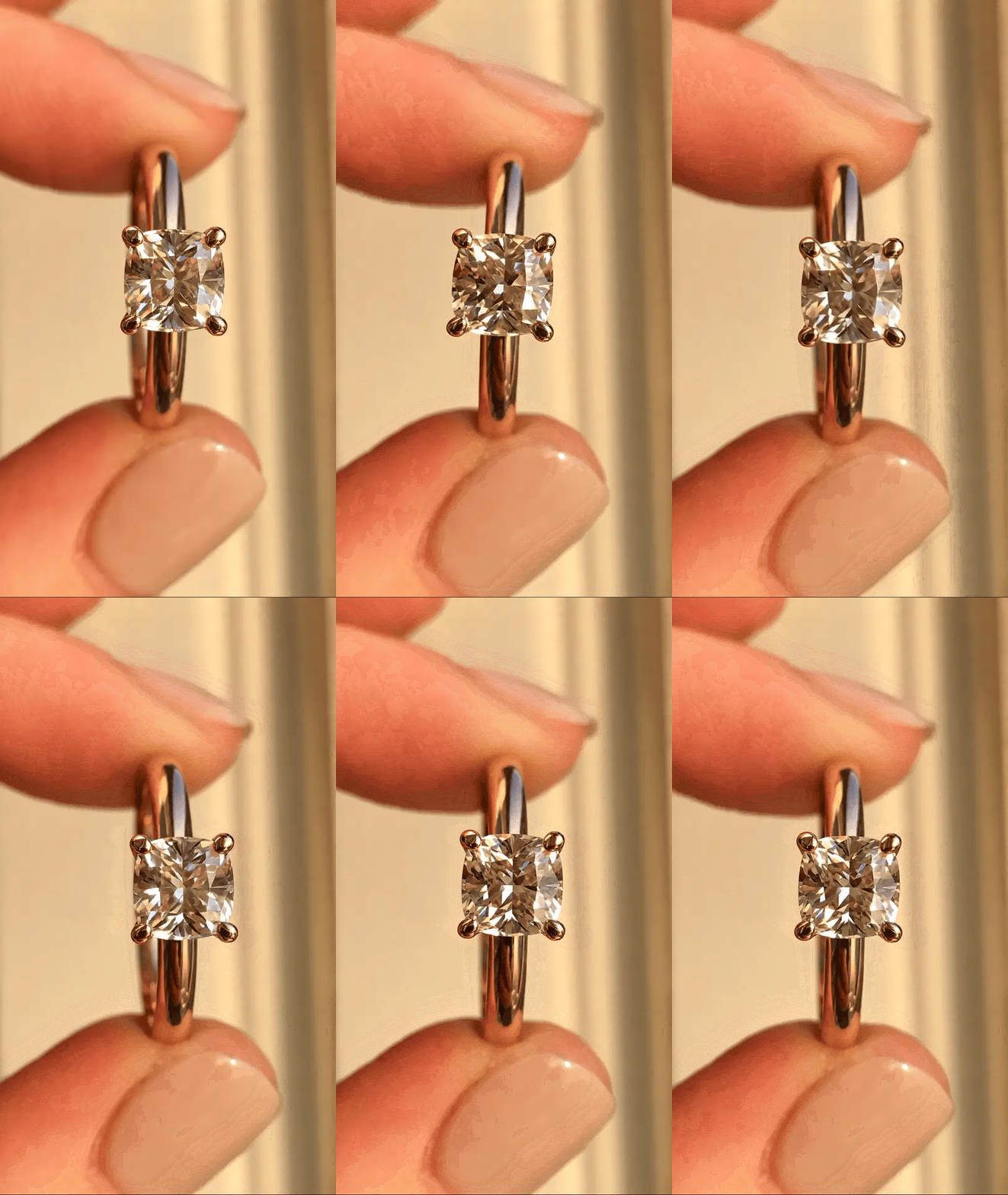
Cushion
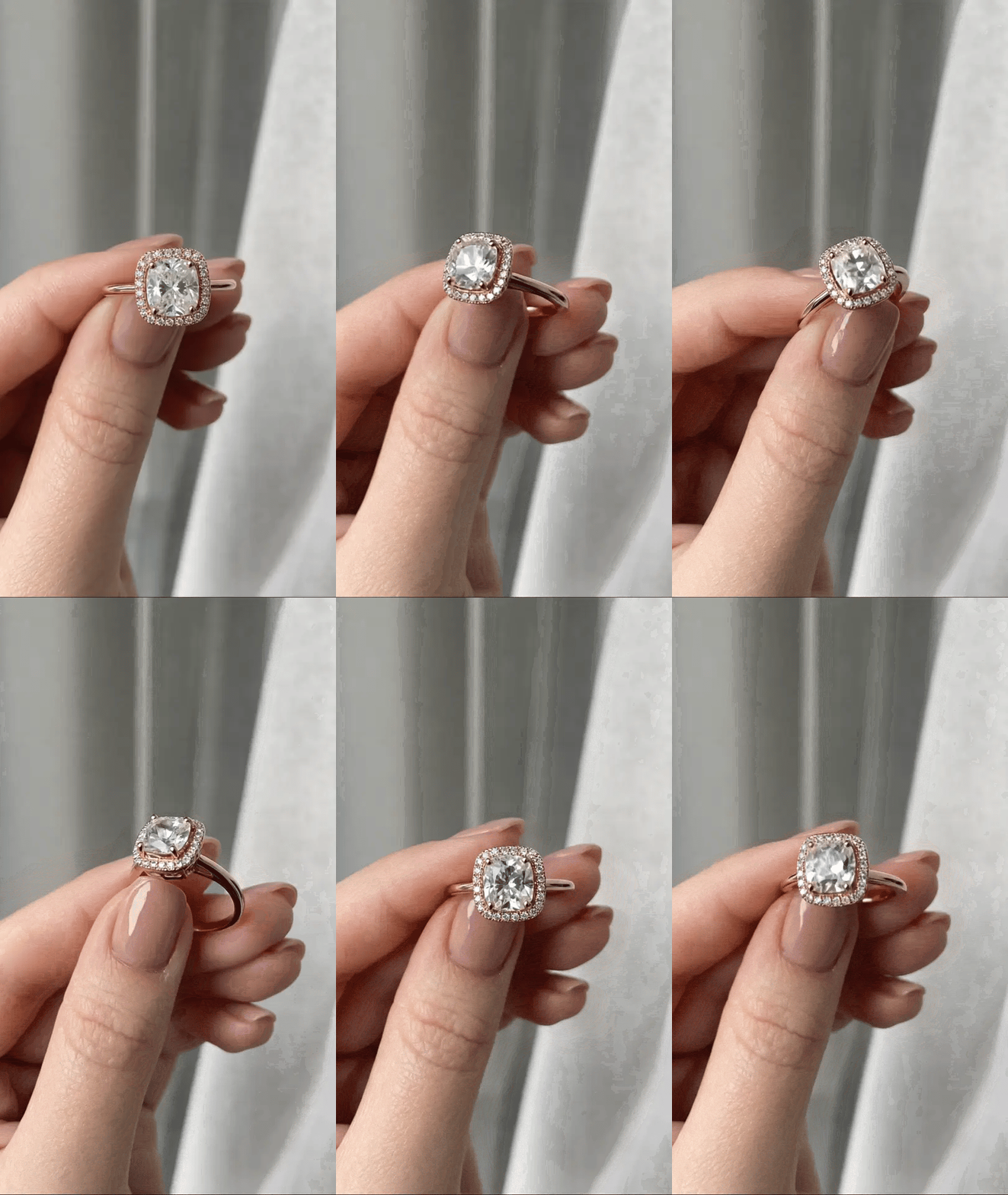
Cushion
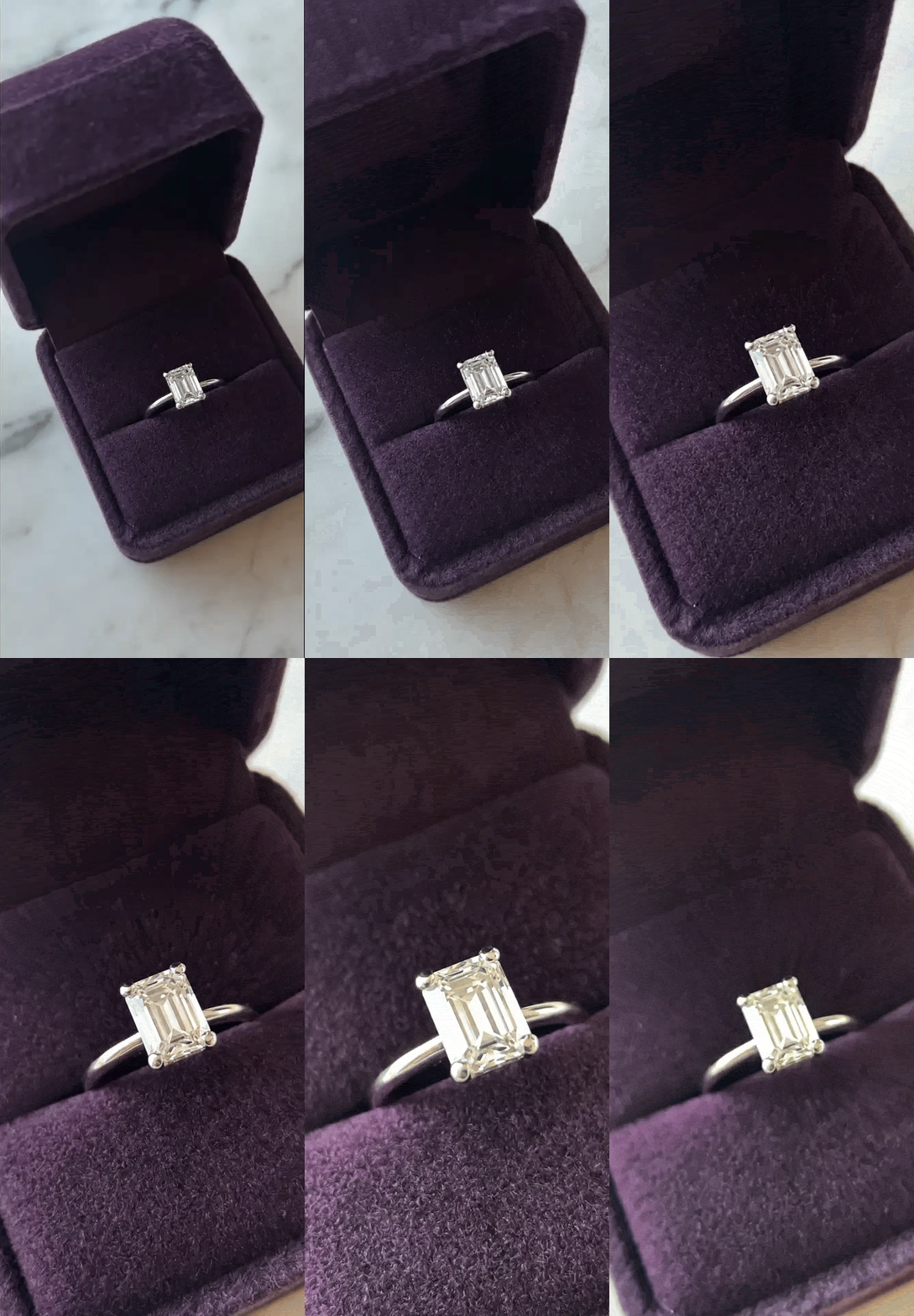
Emerald
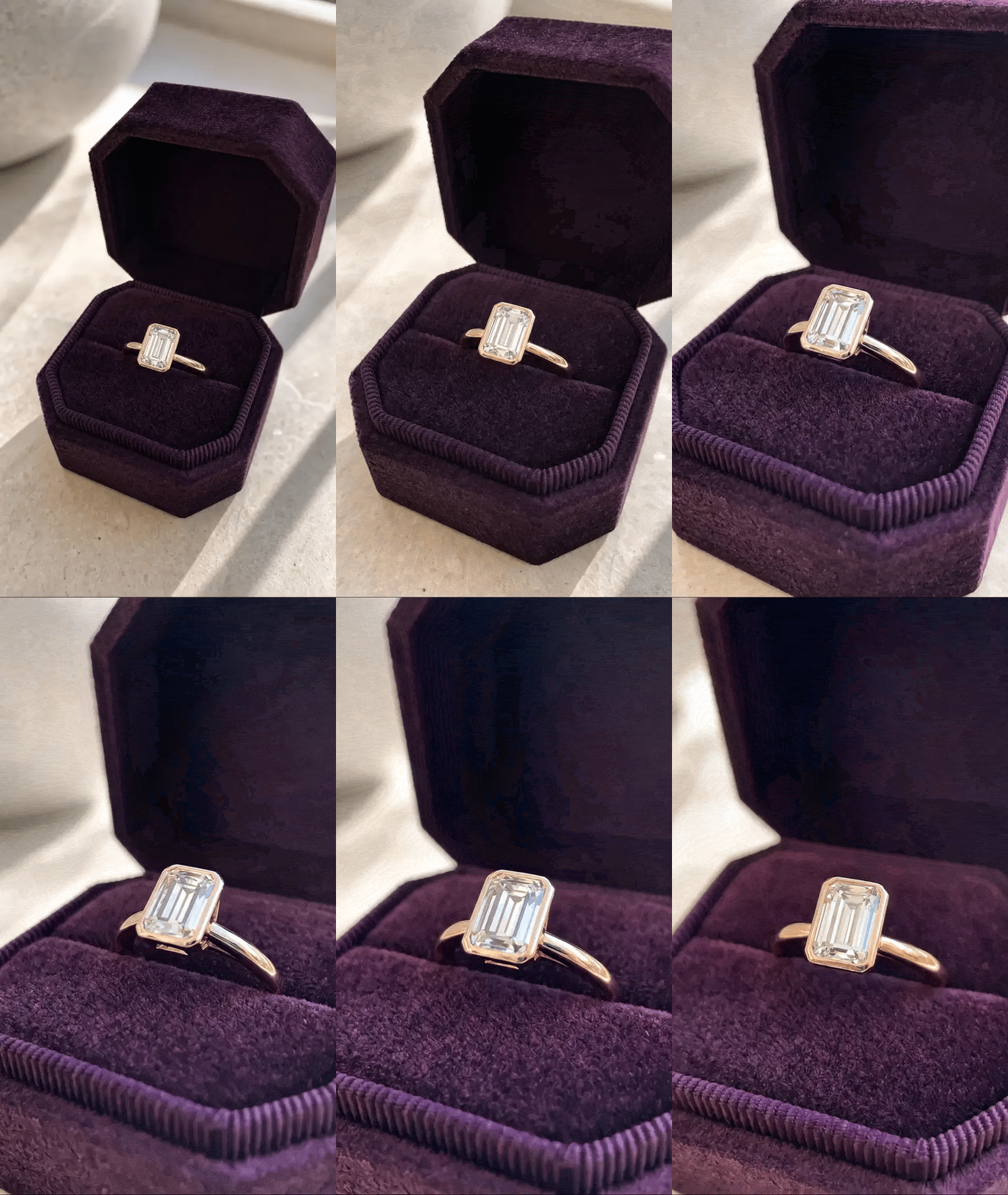
Emerald
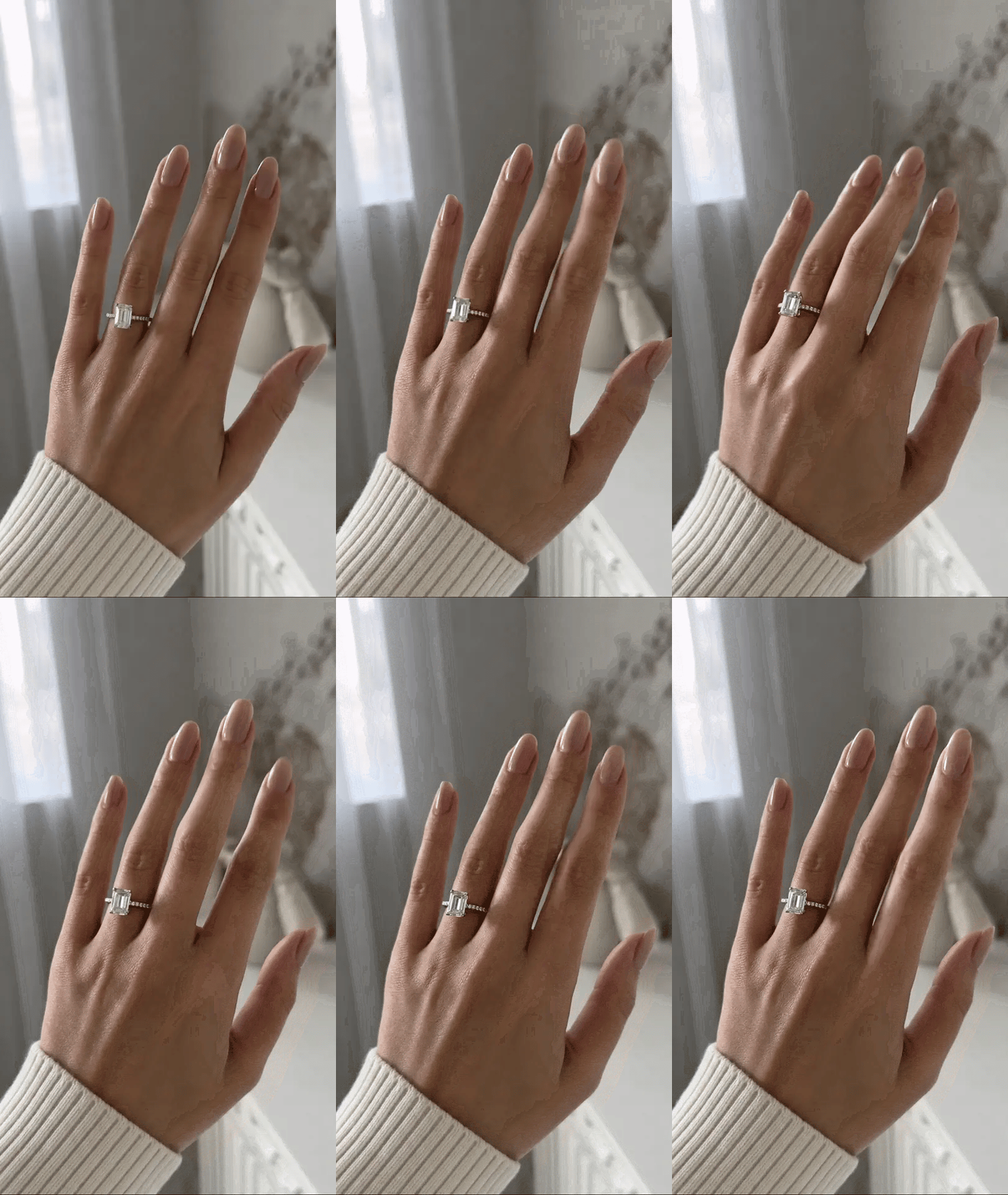
Emerald
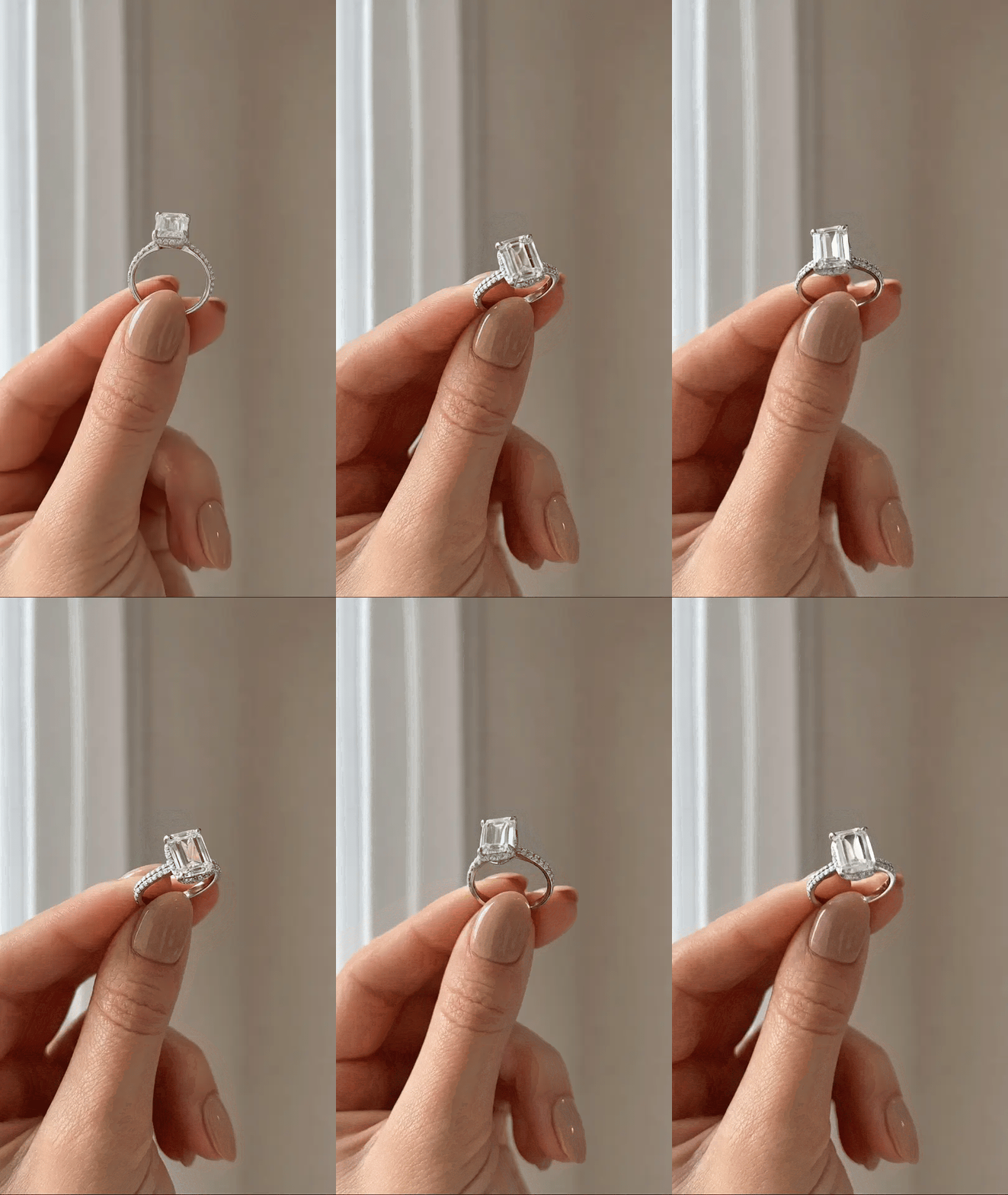
Emerald
Radiant

Pear

Pear

Pear
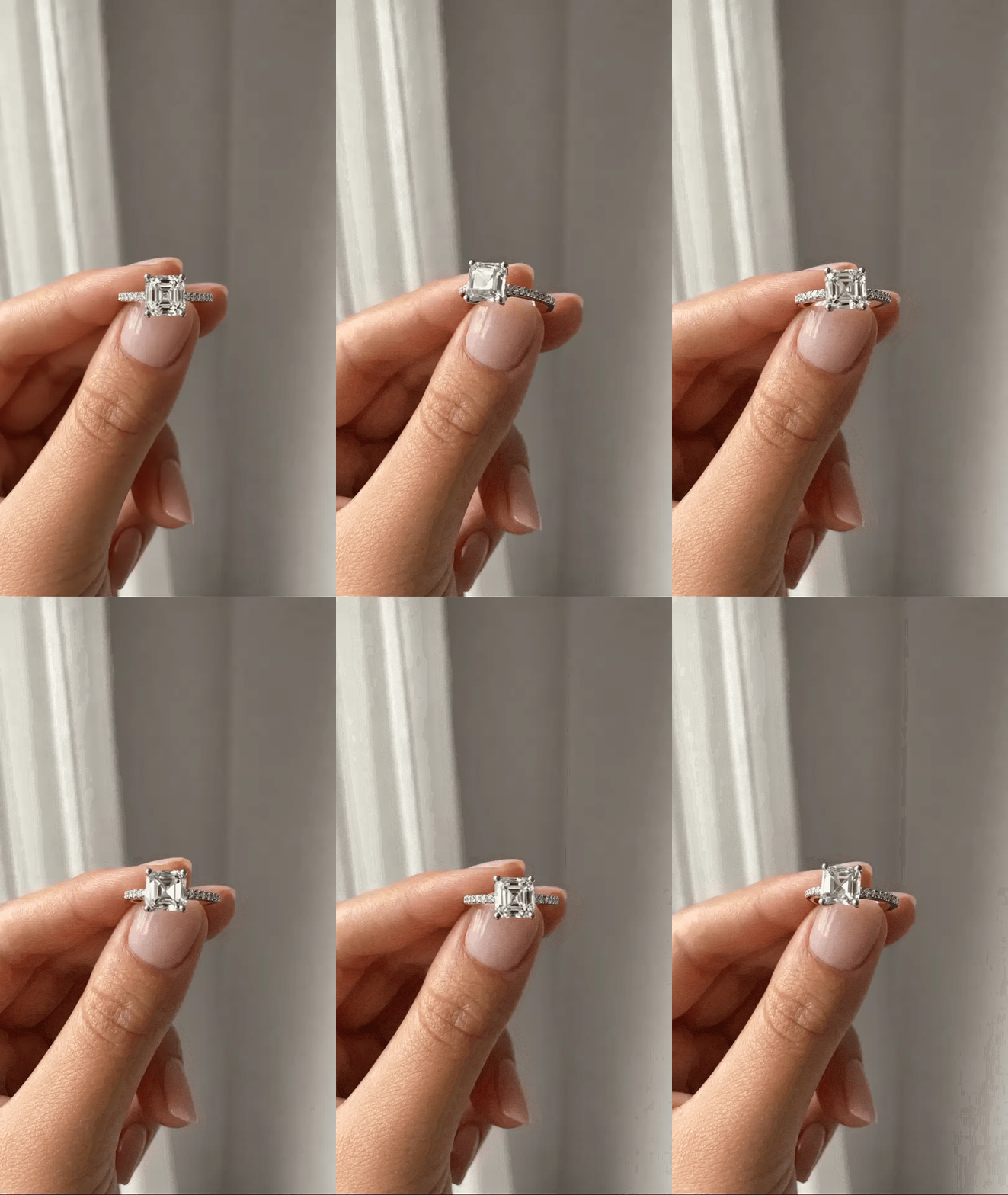
Asscher
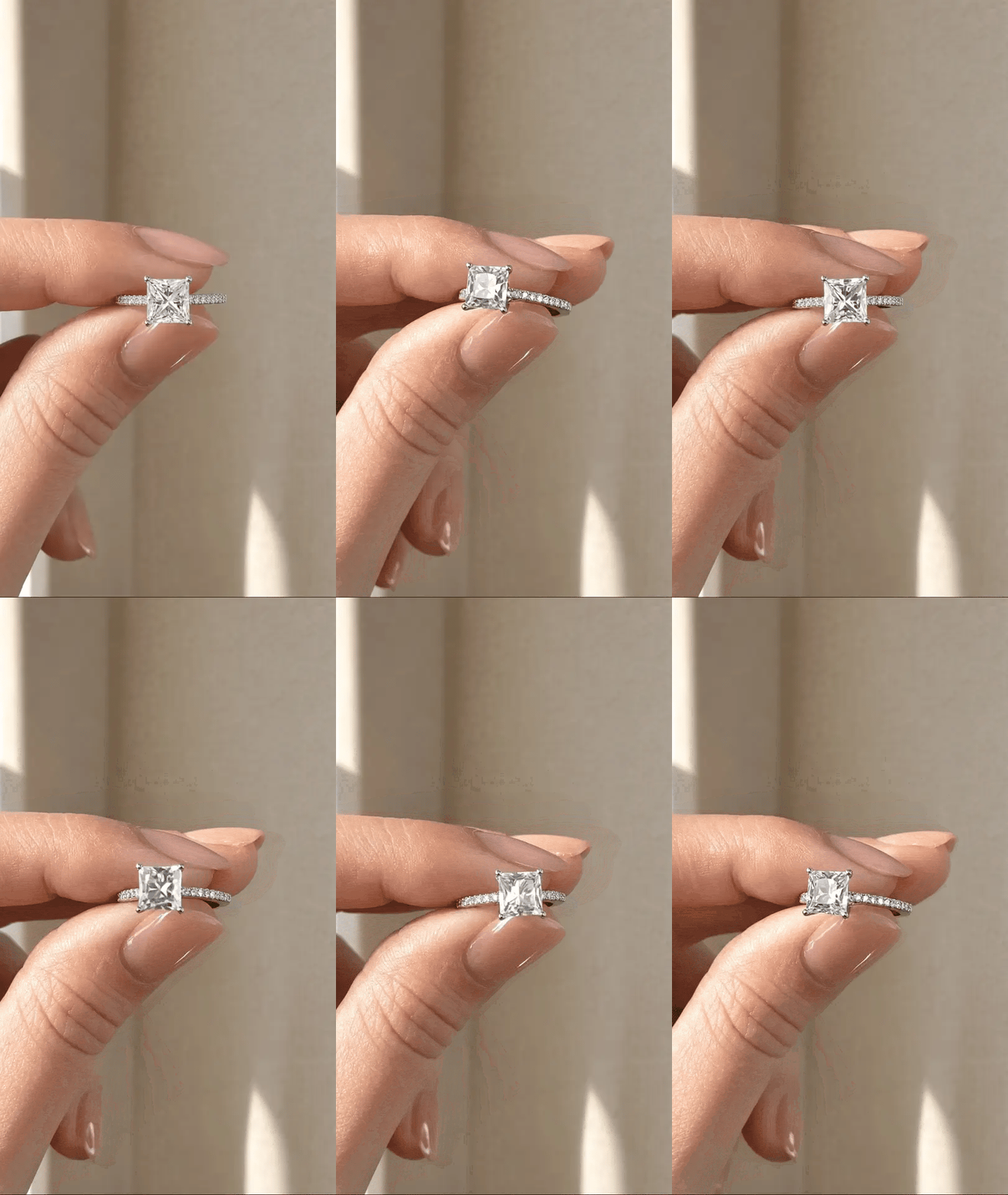
Princess
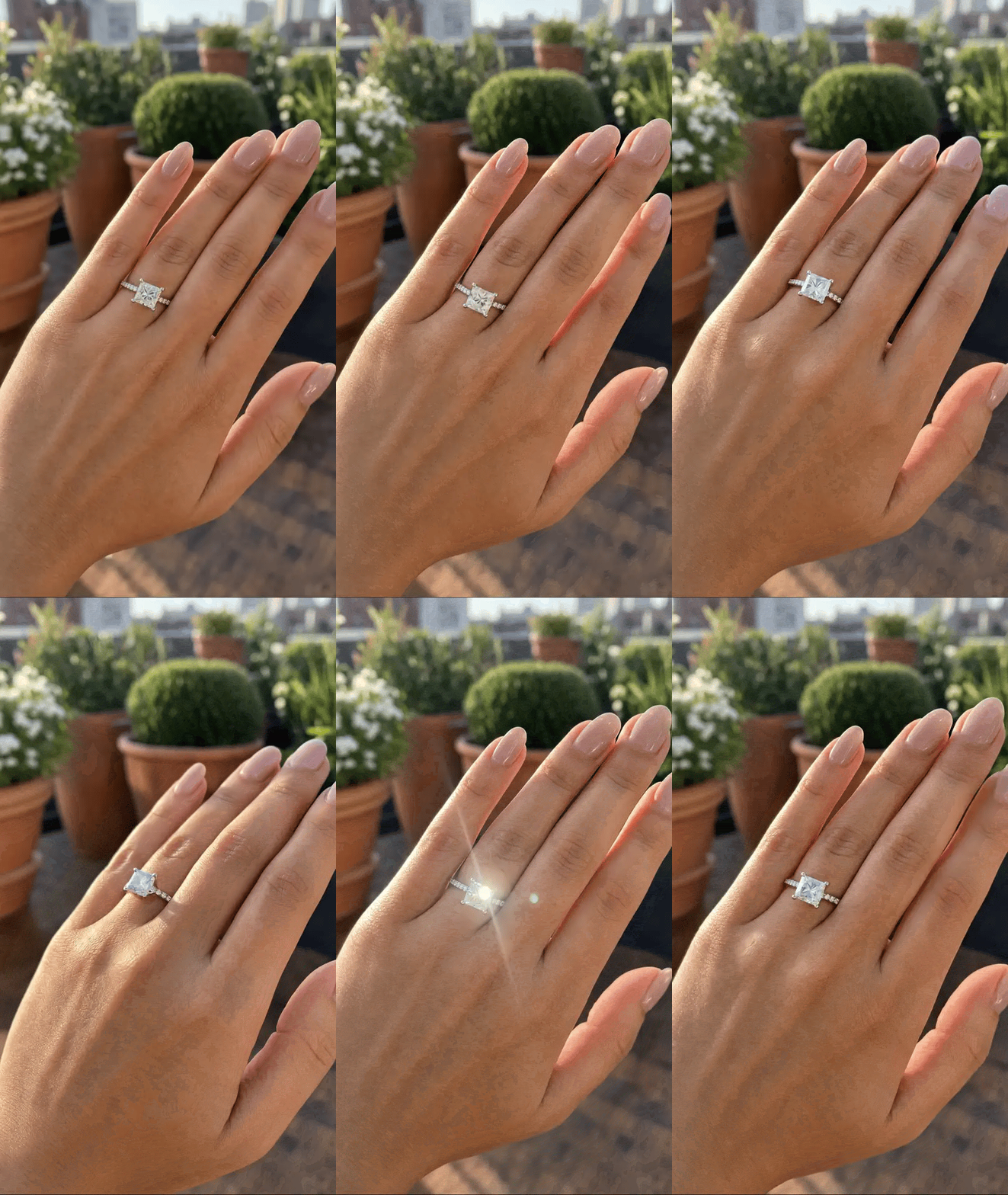
Princess
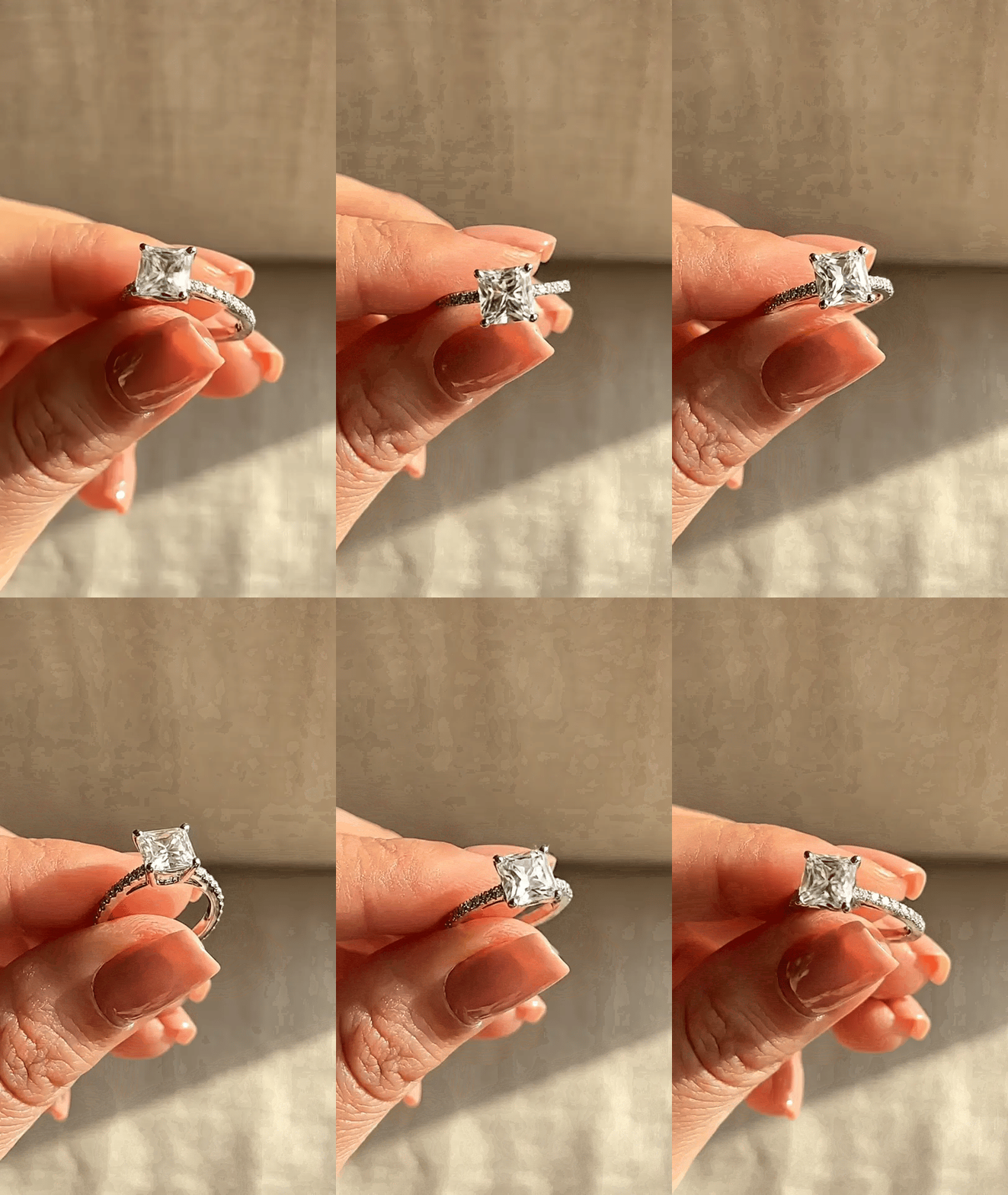
Princess
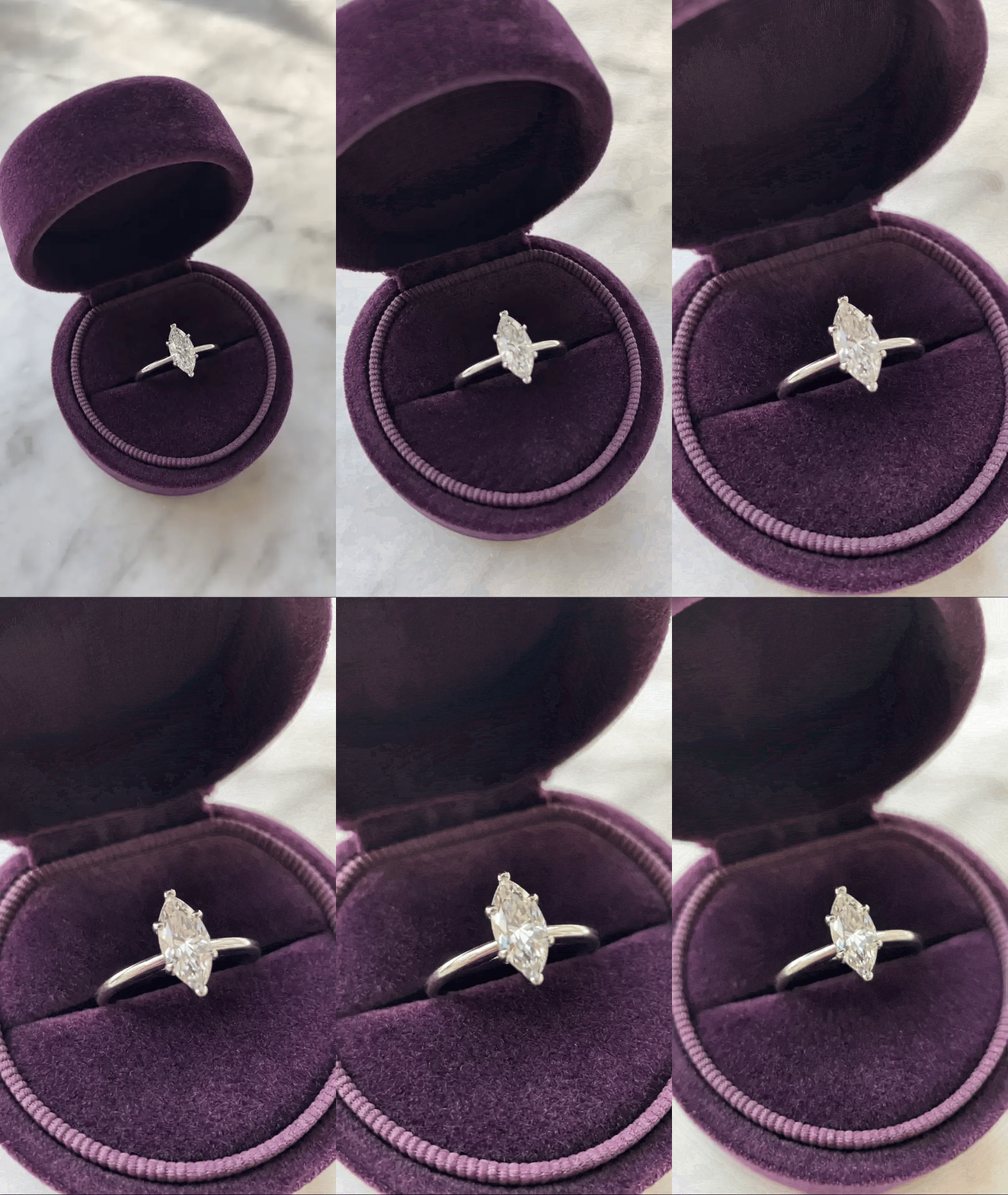
Marquise
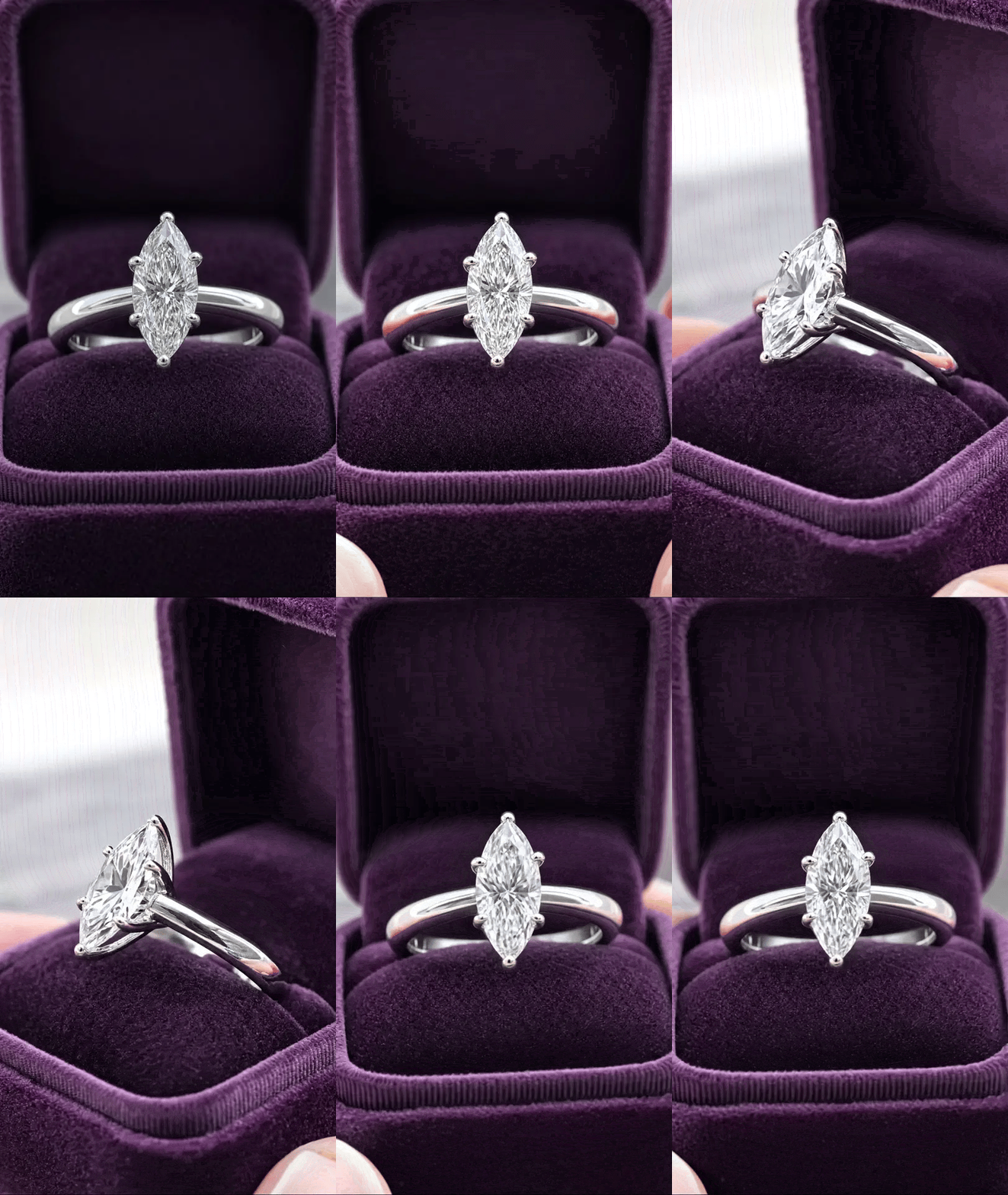
Marquise
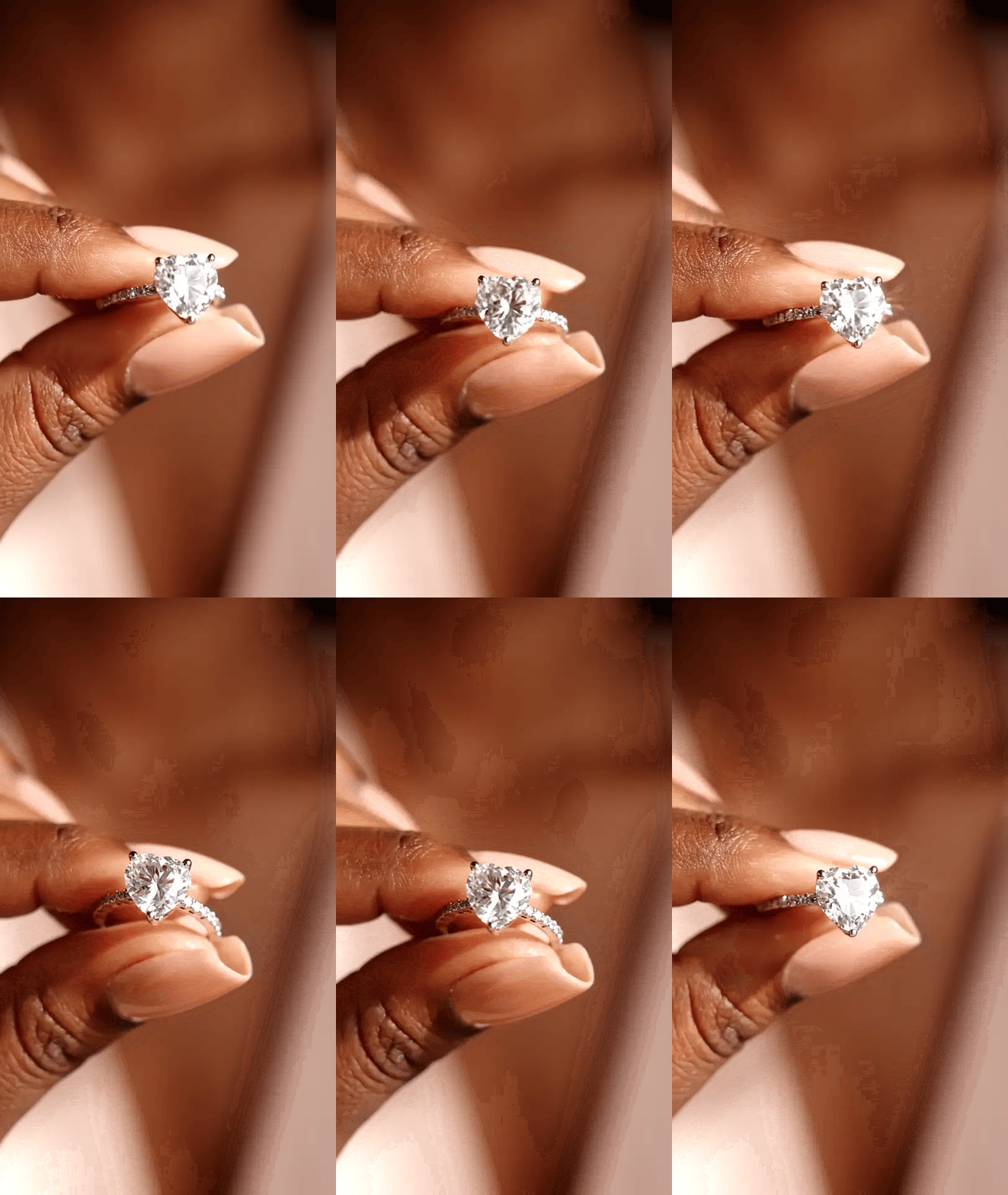
Heart
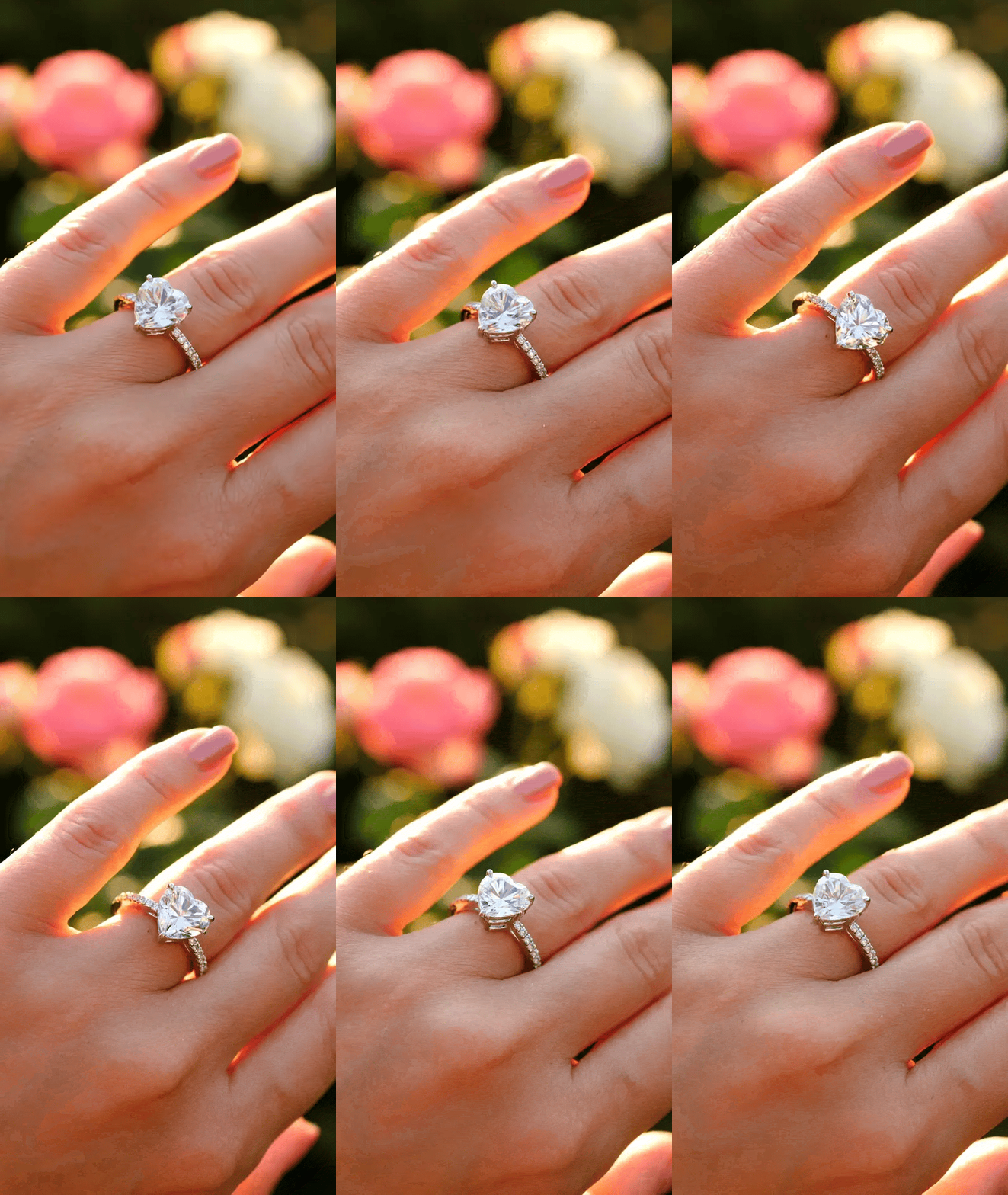
Heart
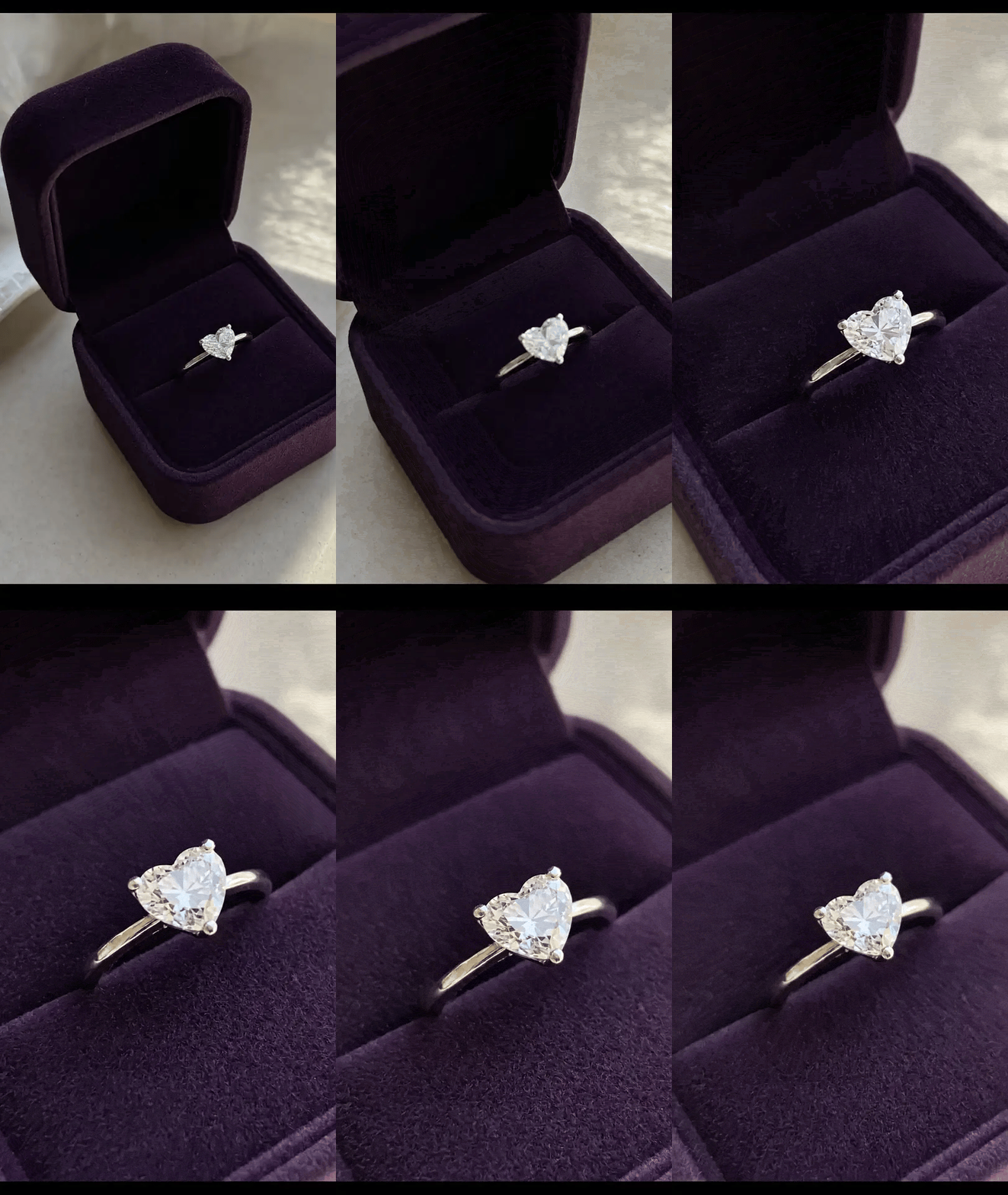
Heart
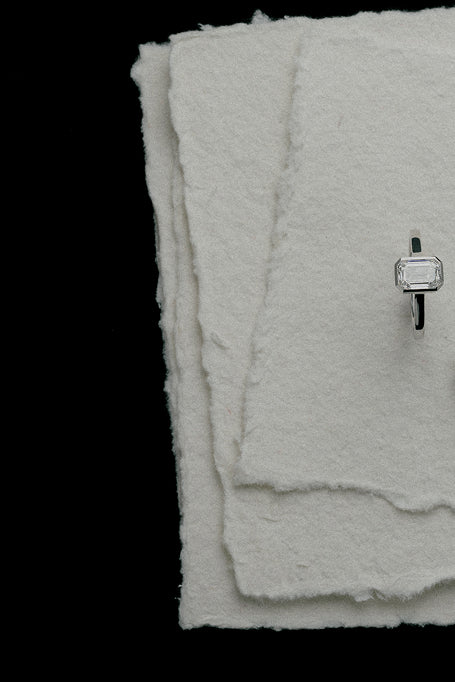
Band Thickness - Thin
On the hand, a thin band reads delicate and precise. It also asks more of the maker, because there is no visual margin for error in the shaping.
Right for you if you have slender or petite fingers and want the ring to elongate the hand, if you plan to stack this ring with a wedding band or other rings later, or if you want the setting to feel as light as possible.
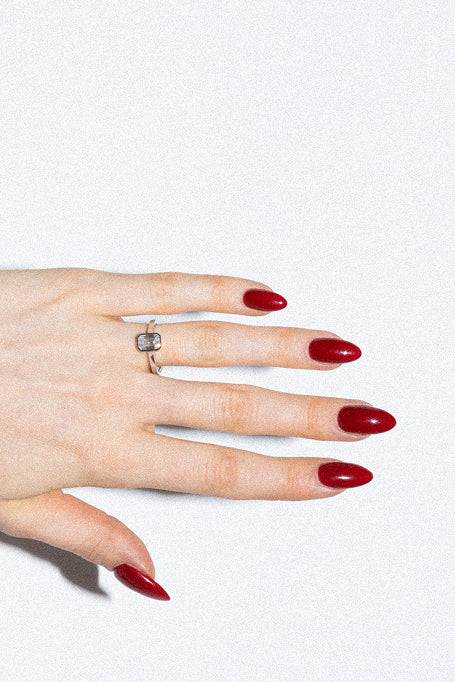
Band Thickness - Thin
On the hand, a thin band reads delicate and precise. It also asks more of the maker, because there is no visual margin for error in the shaping.
Right for you if you have slender or petite fingers and want the ring to elongate the hand, if you plan to stack this ring with a wedding band or other rings later, or if you want the setting to feel as light as possible.
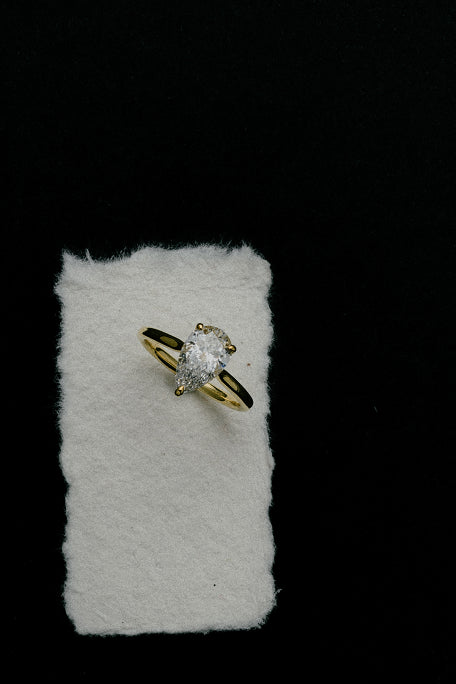
Band Thickness - Medium
It gives the ring enough visual presence to balance a range of diamond sizes and finger shapes, without pulling attention away from the stone.
Right for you if you are unsure between thin and bold and want the safe middle, if you want a ring that reads complete on its own, or if you want a band that works across most stone shapes and sizes without committing to a strong direction.
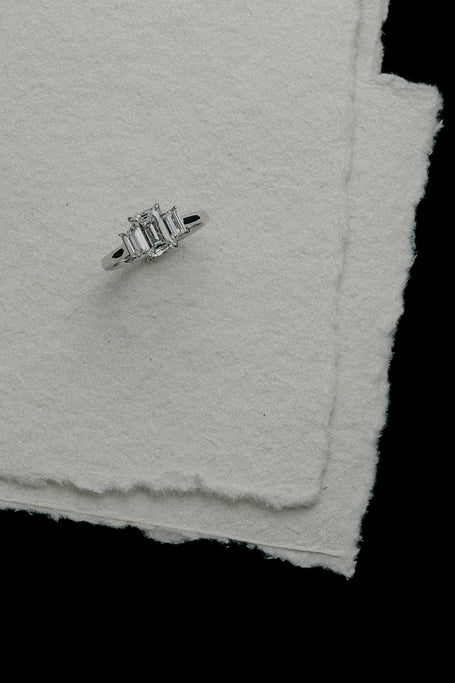
Band Thickness - Medium
It gives the ring enough visual presence to balance a range of diamond sizes and finger shapes, without pulling attention away from the stone.
Right for you if you are unsure between thin and bold and want the safe middle, if you want a ring that reads complete on its own, or if you want a band that works across most stone shapes and sizes without committing to a strong direction.
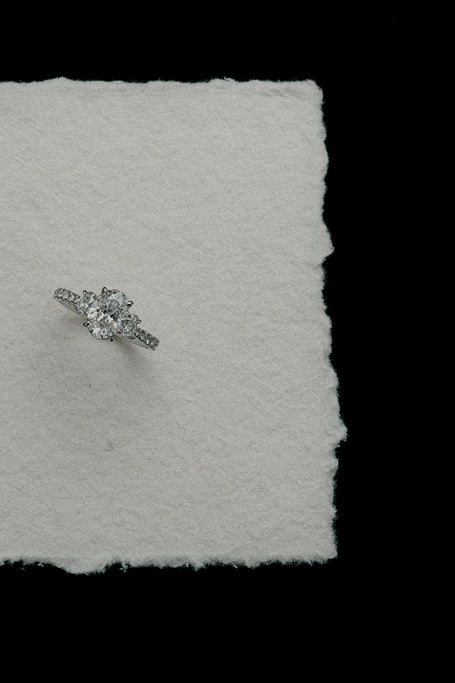
Band Thickness - Medium
It gives the ring enough visual presence to balance a range of diamond sizes and finger shapes, without pulling attention away from the stone.
Right for you if you are unsure between thin and bold and want the safe middle, if you want a ring that reads complete on its own, or if you want a band that works across most stone shapes and sizes without committing to a strong direction.
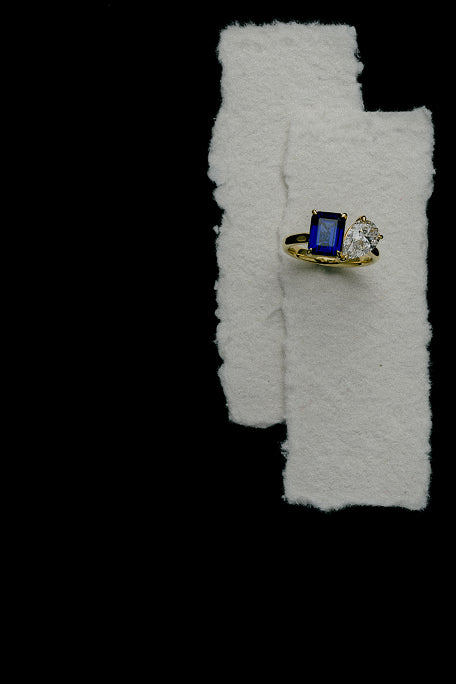
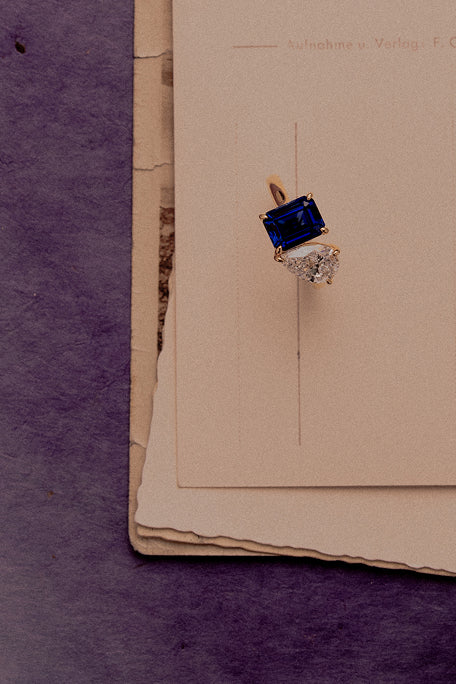
Band Thickness - Bold
It gives the ring more weight on the hand and a stronger side profile. Emerald, Asscher and radiant cuts often read best against a bold band, because their geometry balances the extra metal.
Right for you if you want a ring with presence from every angle rather than only from above, if your centre stone is a step cut, or if you want the band itself to be part of the design rather than a frame for the stone.
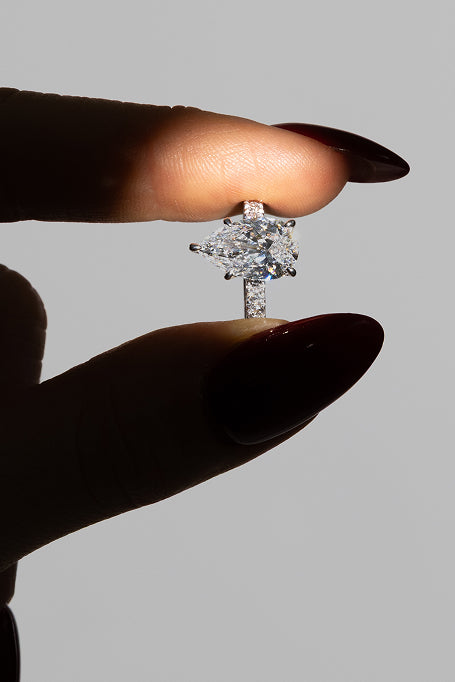
Band Thickness - Bold
It gives the ring more weight on the hand and a stronger side profile. Emerald, Asscher and radiant cuts often read best against a bold band, because their geometry balances the extra metal.
Right for you if you want a ring with presence from every angle rather than only from above, if your centre stone is a step cut, or if you want the band itself to be part of the design rather than a frame for the stone.
Band Thickness - Bold
It gives the ring more weight on the hand and a stronger side profile. Emerald, Asscher and radiant cuts often read best against a bold band, because their geometry balances the extra metal.
Right for you if you want a ring with presence from every angle rather than only from above, if your centre stone is a step cut, or if you want the band itself to be part of the design rather than a frame for the stone.
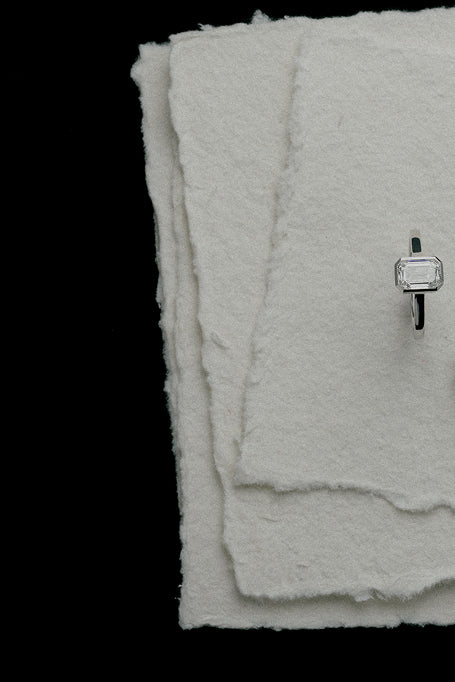
Band Profile - Classic
A comfort-fit interior curves gently inward so the ring sits more naturally on the finger through the day. It is a detail you feel but do not see from the outside.
Right for you if you want a ring that is comfortable to wear every day, if you plan to stack a wedding band alongside it later, or if you want a finish that keeps all the attention on the centre stone.
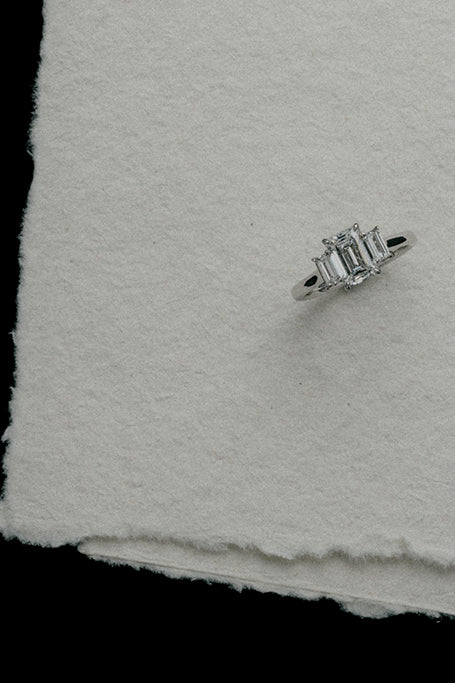
Band Profile - Rounded
Where a plain band frames the diamond, a pavé band joins it. The result is a ring that catches light from the side and profile, not only from above.
Right for you if you want the brilliance to extend beyond the centre stone, if you prefer a ring that reads as a complete jewellery piece rather than a solo stone with a support, or if you want more brilliance across the whole ring without moving up in centre stone size.
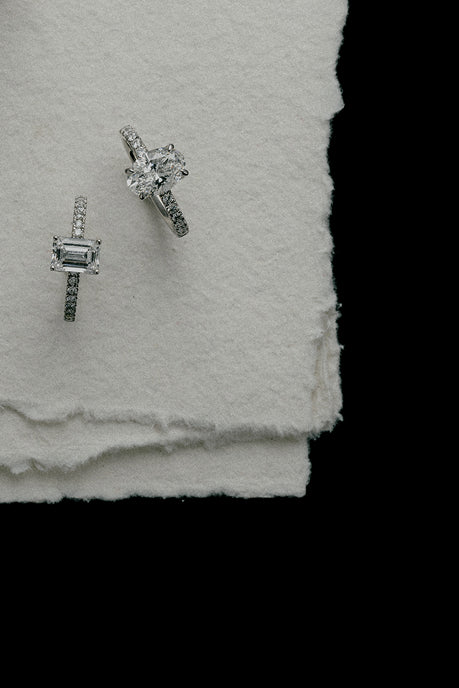
Band Profile - Diamond Band
Because it sits flat against a wedding band without any gap, it is the most stacking-friendly design.
Right for you if you already know you want to stack a wedding band alongside your engagement ring, if you prefer clean geometry over sculpted shaping, or if you want the setting to feel as classic and structural as possible.
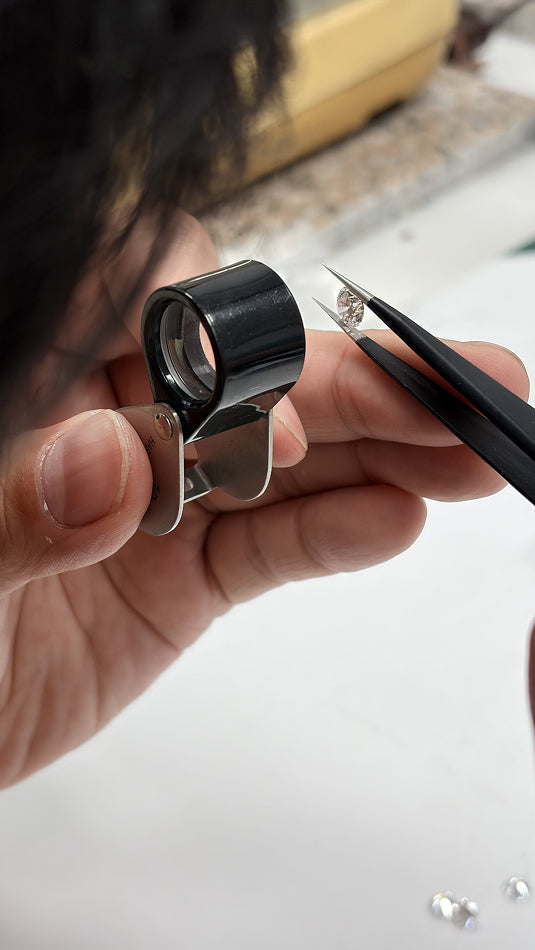
- IGI Certified Diamond
- Lifelong After-Care Service
- 20 days returns and free shipping
Want to further customise?
Our concierge team can help with special requests, custom
designs, or any questions.

Baguette
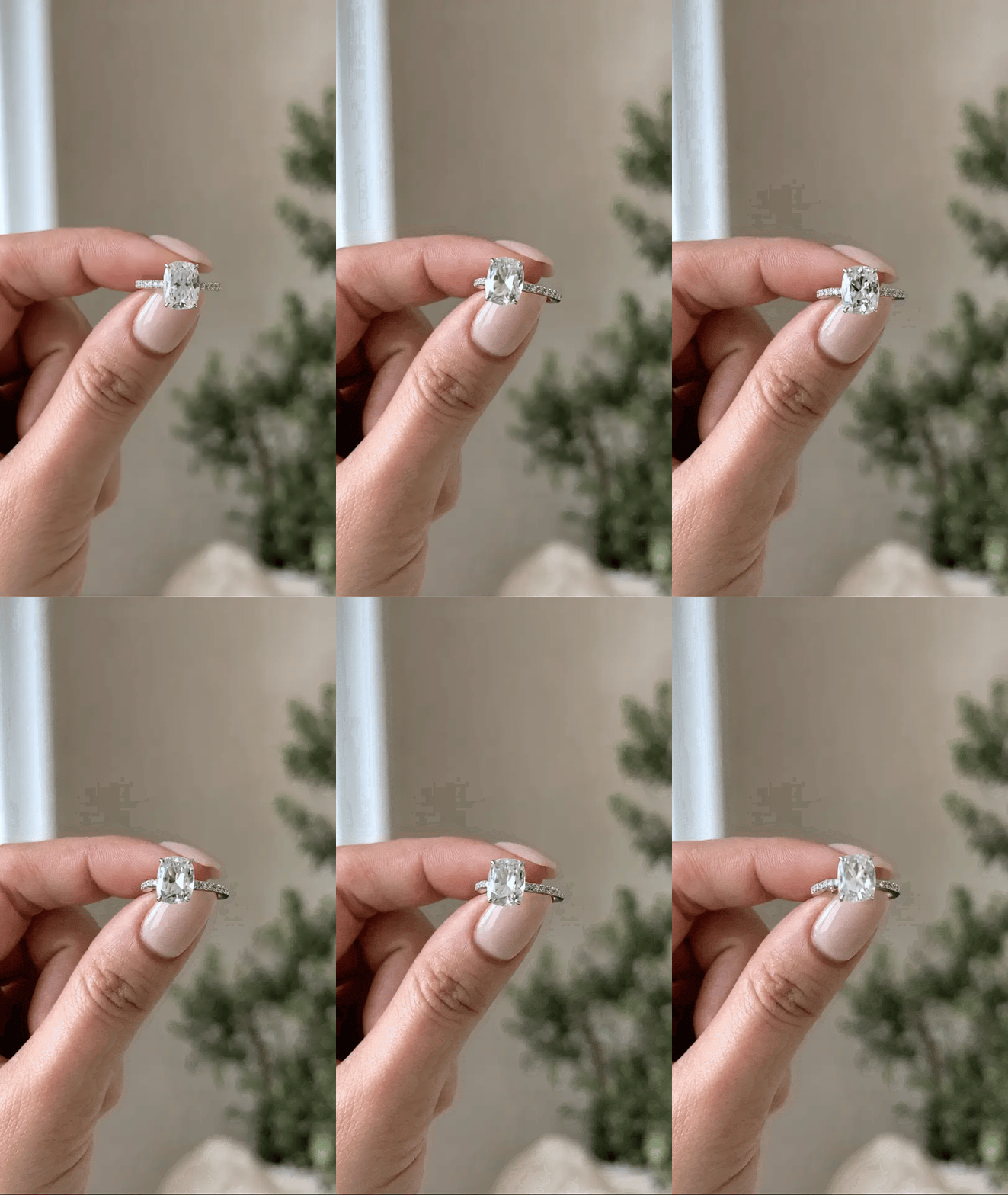
Elongated Cushion
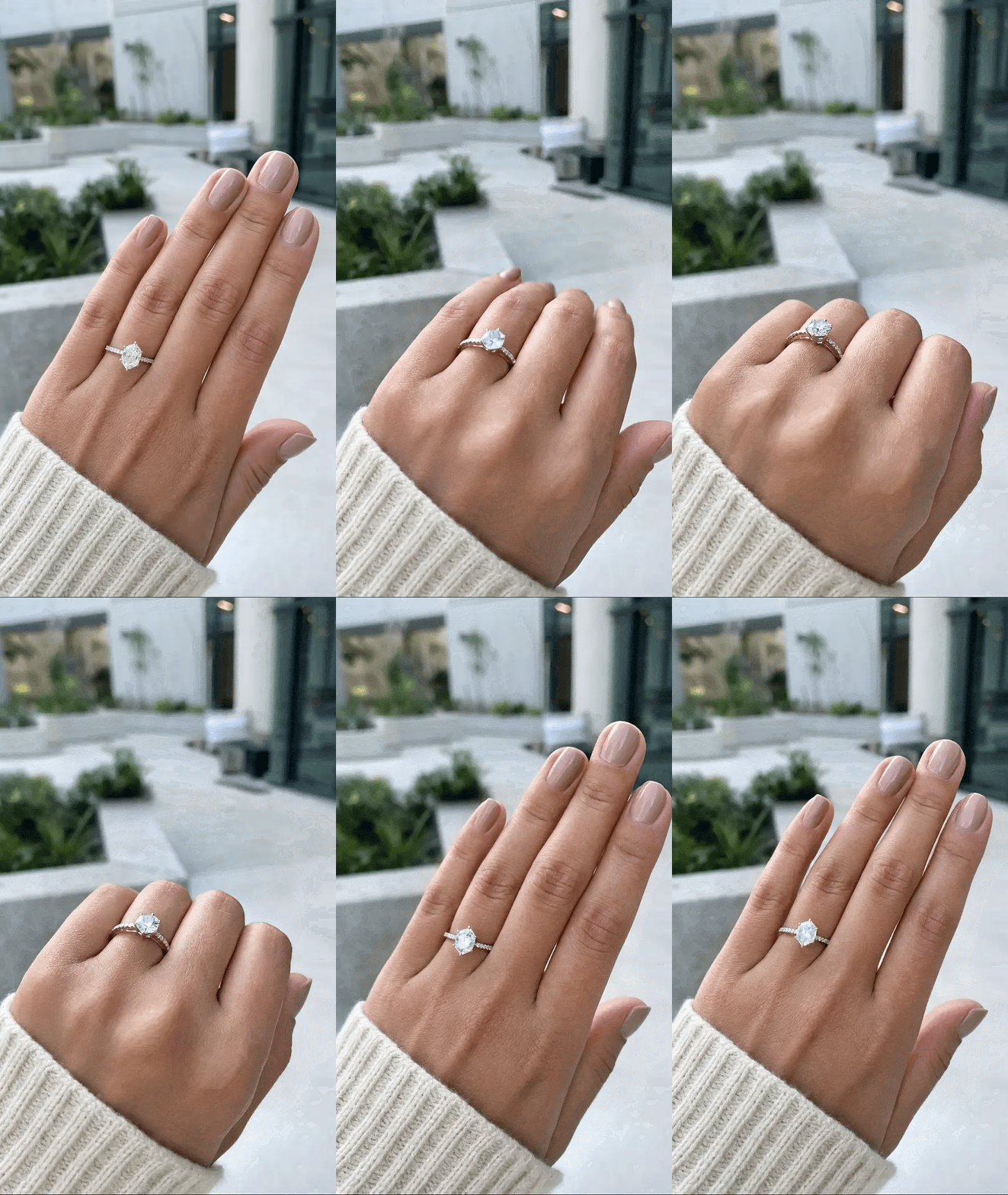
Elongated Hexagon
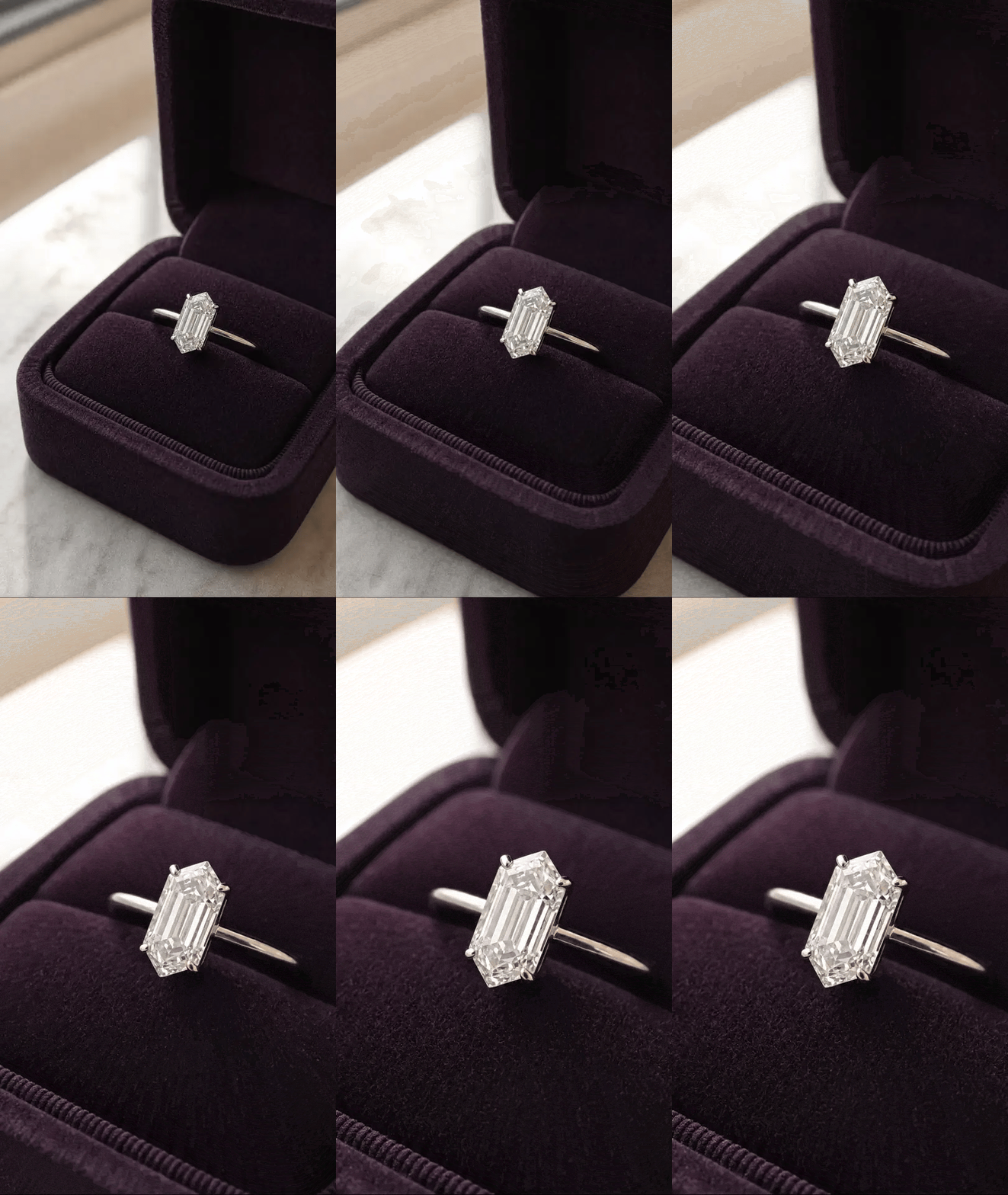
Elongated Hexagon
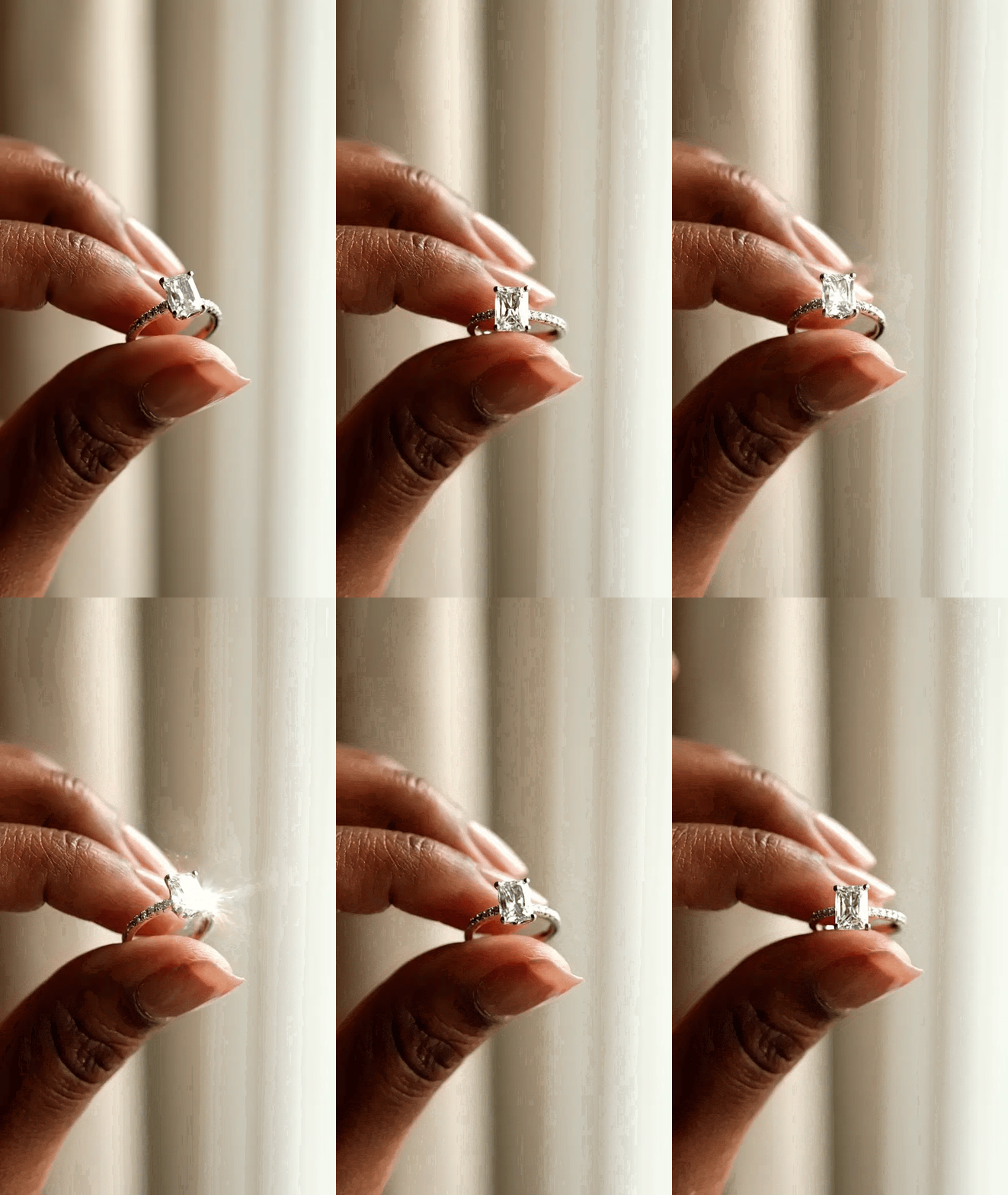
Elongated Radiant
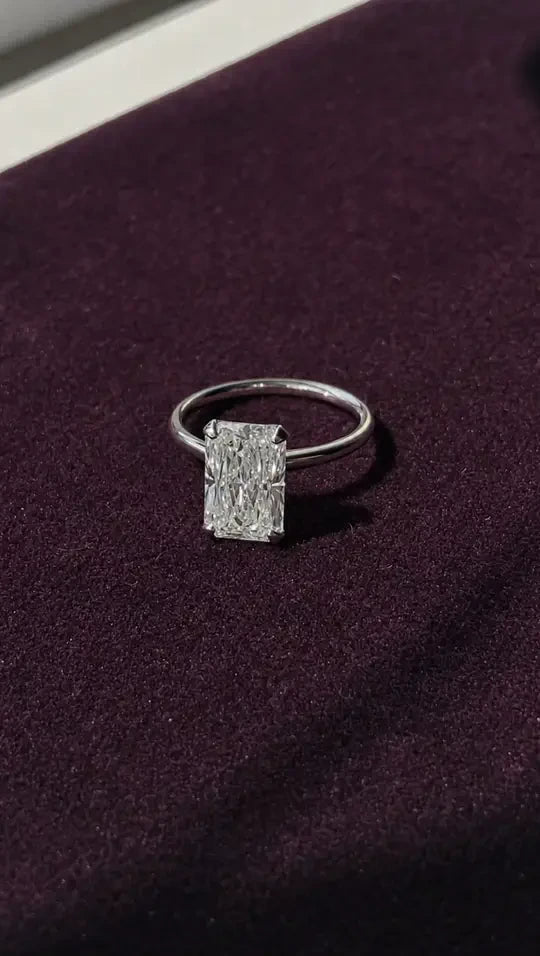
Elongated Radiant
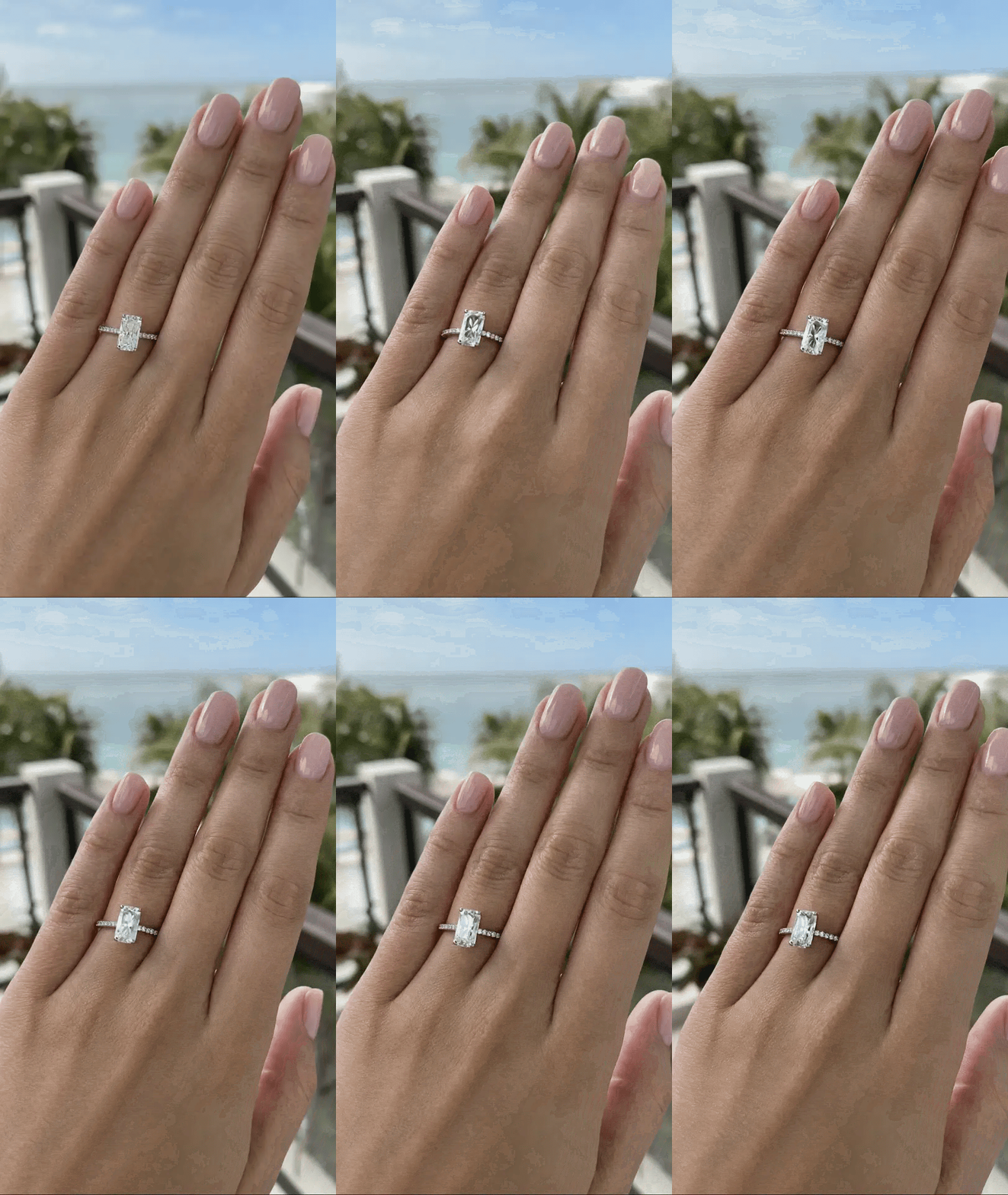
Elongated Radiant
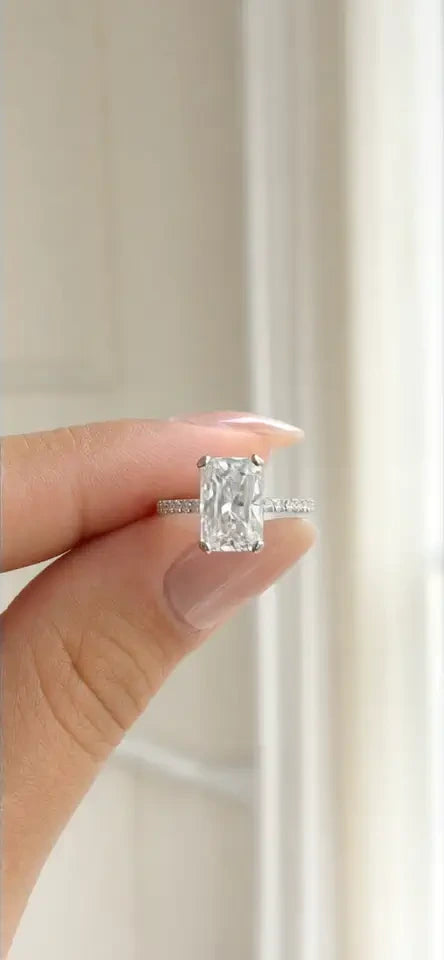
Elongated Radiant
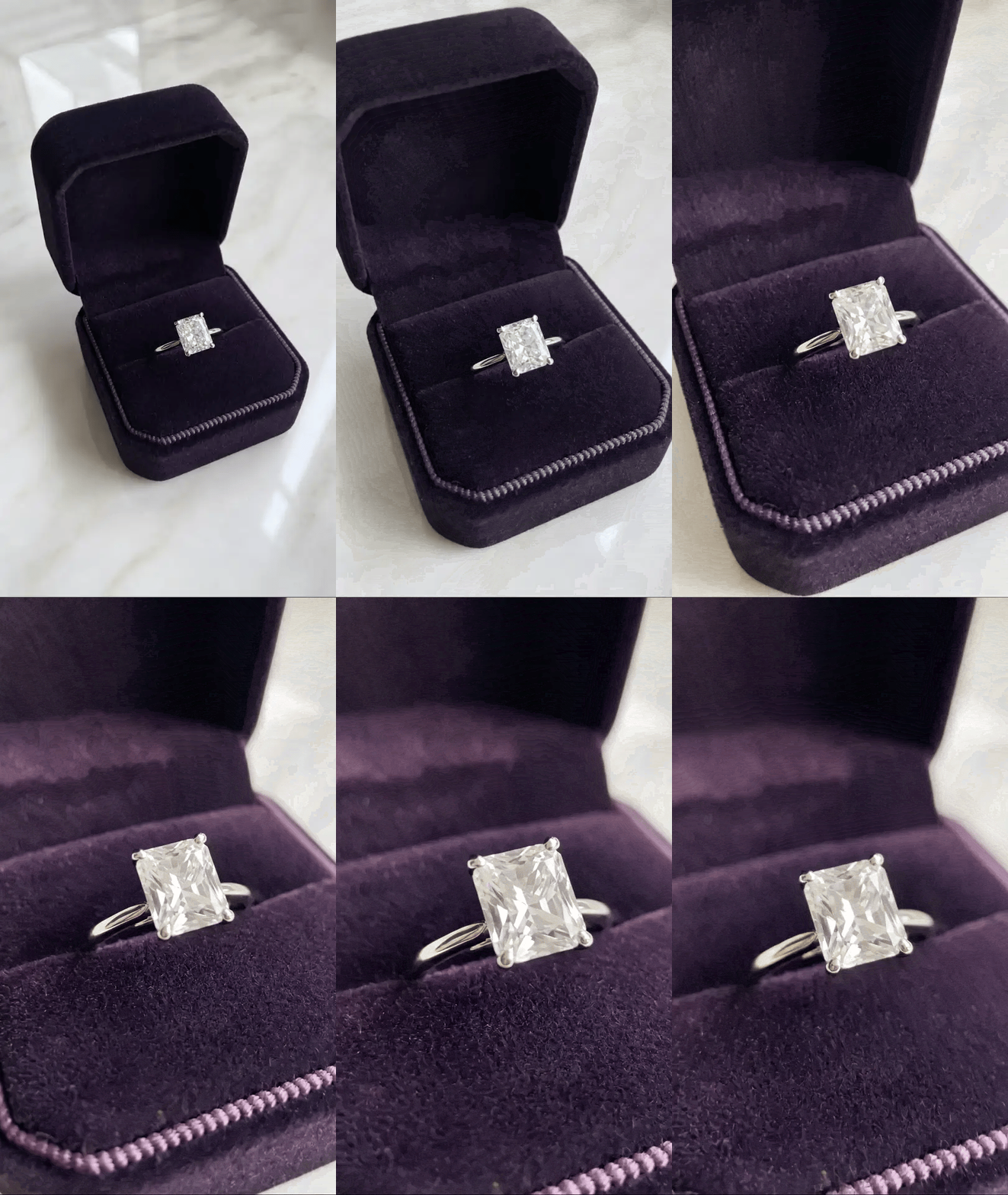
Elongated Radiant
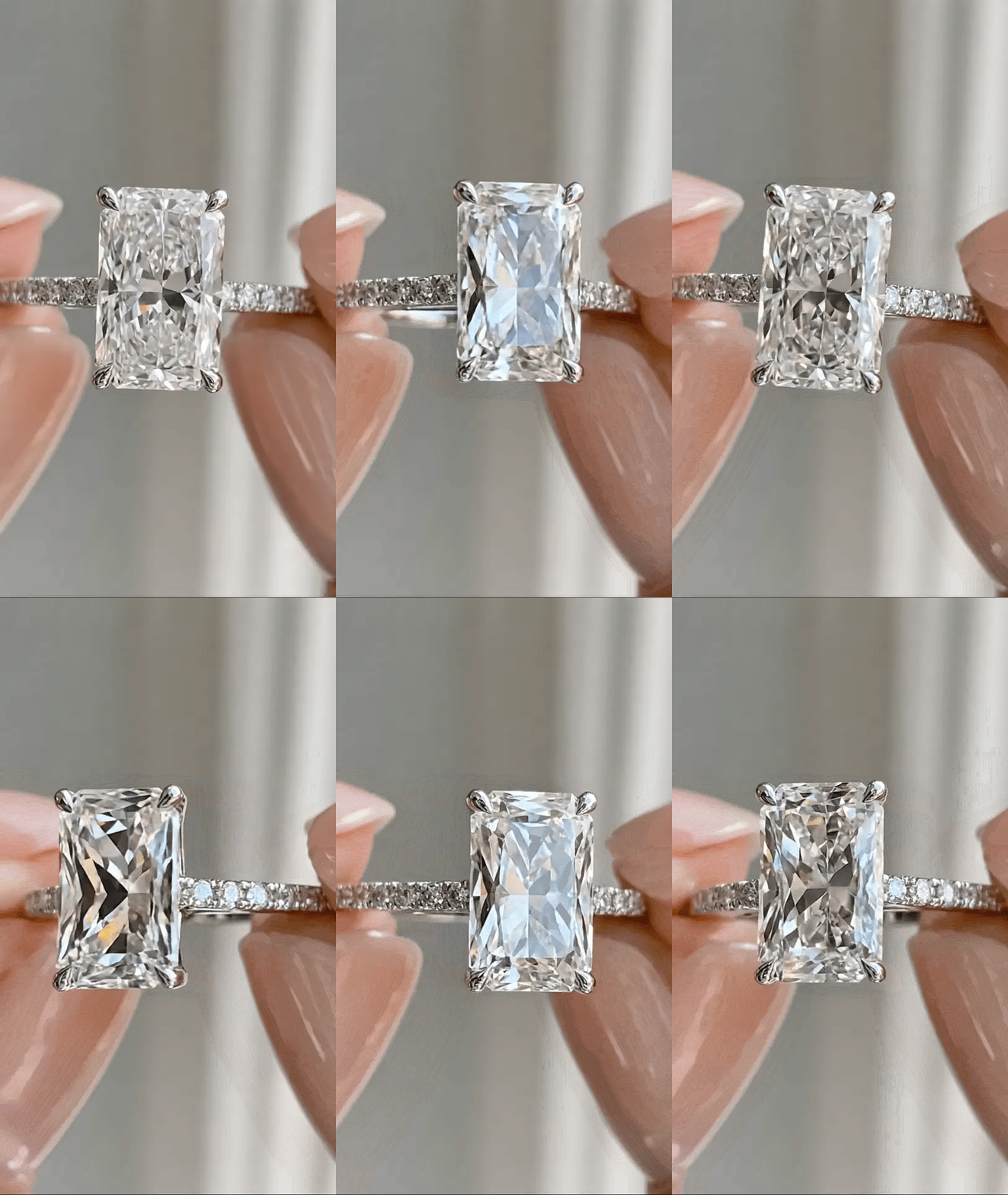
Elongated Radiant
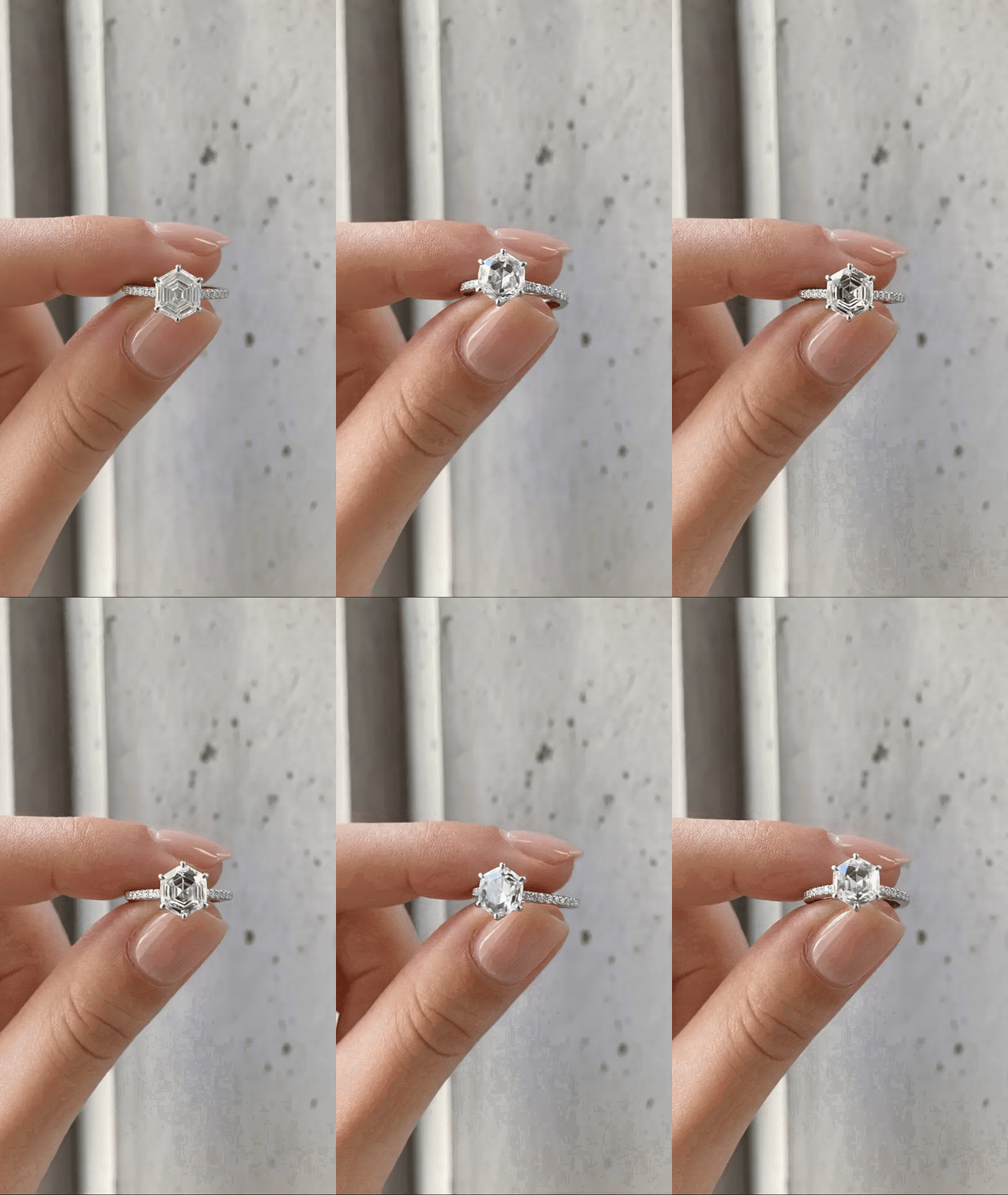
Hexagon
Mixed
Mixed
Mixed
Square
Square
Square
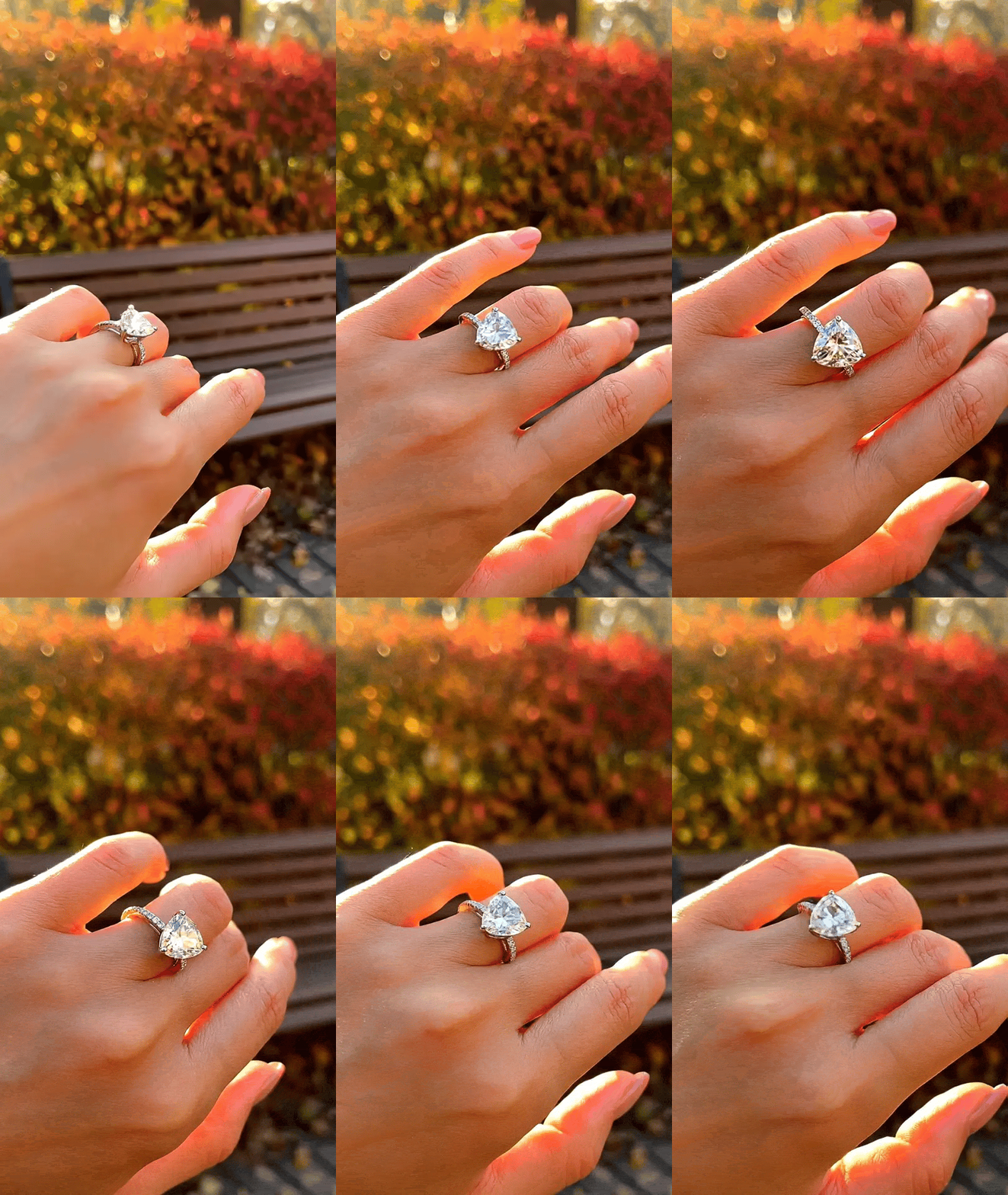
Trillion
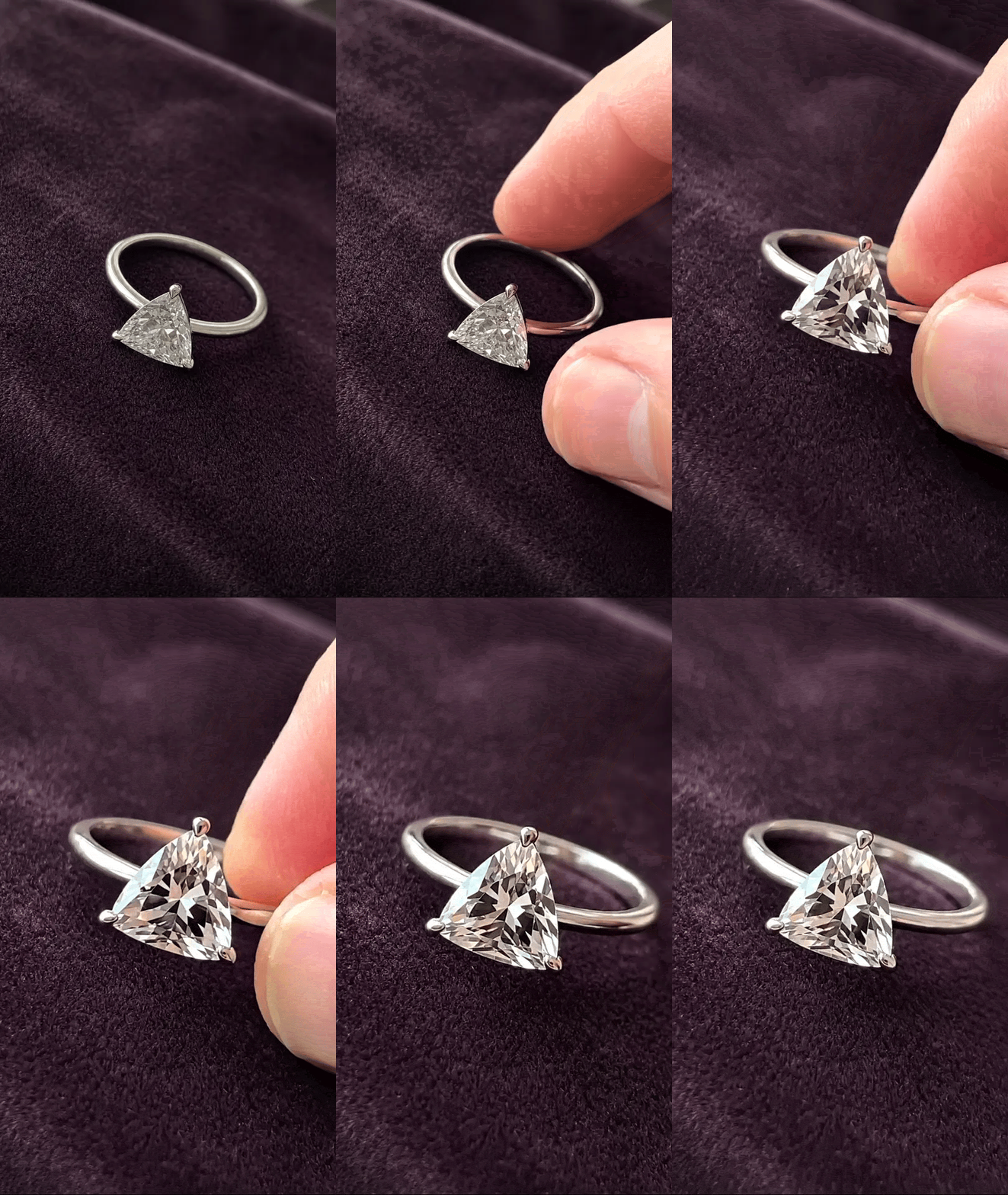
Trillion
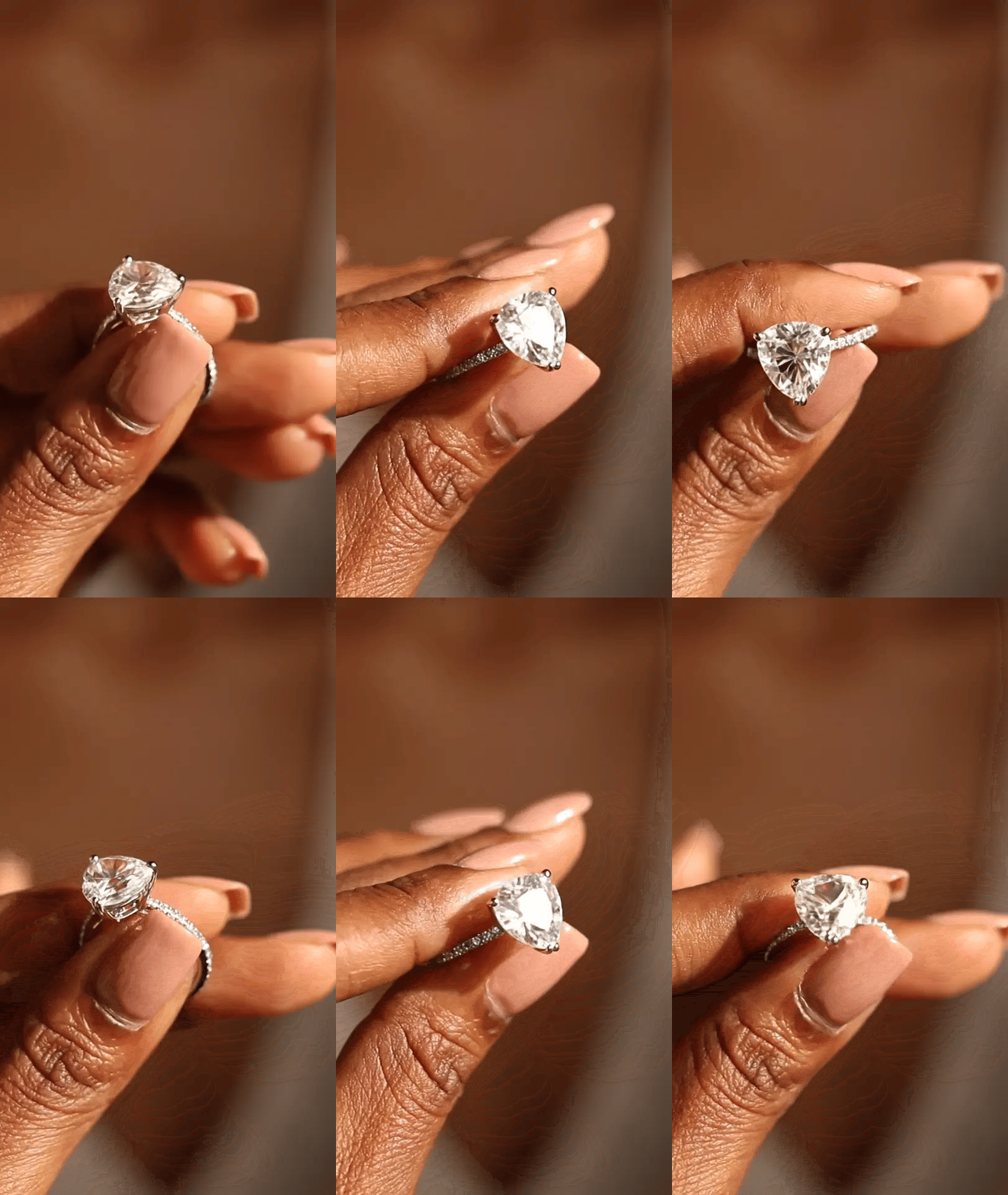
Trillion
Common Questions
Is white gold the same as platinum?
They look almost identical when new, but they are different metals.
White gold is yellow gold mixed with alloys and finished with a rhodium plating for its cool white surface. Platinum is a single element, naturally white, denser, and 95% pure in jewellery form.
Over years of wear, platinum develops a soft satin patina. White gold slowly warms in tone unless it is re-plated every few years.
Go with platinum if you want the lowest-maintenance lifetime piece.
Why do we use 18k Gold?
You might assume 24k is the superior choice because it holds more gold. It is not.
24k is too soft to hold a diamond securely and too soft for daily wear. 18k is 75% pure gold mixed with alloys that add durability. Rich enough in colour to read unmistakably as gold, pure enough to be gentle on sensitive skin, and hard enough to protect a stone for a lifetime.
If lower-karat jewellery has ever left a green mark on your skin, the alloy content is usually the cause. 18k largely removes that problem.
Which metal is the most durable?
If long-term durability is your priority, this is how the four metals rank:
- Platinum. The most durable overall. It is denser than gold and does not wear thin over time. When it is scratched, the metal moves rather than disappears.
- Rose gold. The most durable of the golds. Its copper alloy makes it harder and more dent-resistant than white or yellow gold.
- White gold. Stronger than yellow gold, but the rhodium plating wears and needs occasional re-plating.
- Yellow gold. The softest of the four. It thins and shows wear the fastest, especially in higher karats.
Which metal suits which skin tone?
The right metal follows the skin undertone, not the depth.
What is my skin undertone? Quick test: look at the veins on the inside of your wrist. If they read green, you carry warm undertones and yellow gold will suit you. If they read blue or purple, your undertones are cool and white metals will read cleaner.
Warm undertones (peachy, golden, olive) sit beautifully against yellow gold, which creates a soft, luminous contrast. Cool undertones (pink, blue-based) pair better with white gold or platinum.
Rose gold is the safe pick if you are unsure. It works across almost all skin tones and is particularly good on olive or neutral undertones.
Which metal is best for sensitive skin?
For sensitive skin, high-karat yellow gold is usually the safest choice.
18k yellow gold contains very little nickel or other common allergens, and often resolves reactions caused by lower-grade white gold or fashion jewellery.
Platinum is 90 to 95% pure in jewellery form, which makes it naturally hypoallergenic. It is the more expensive option, but the most reliable if you have reacted to metals in the past.
Do cool-tone metals such as white gold and platinum make my diamond look better?
Yes. A cool, neutral setting reflects light into the diamond without adding any warm tone, so the stone reads whiter and brighter than the same diamond set in yellow or rose gold.
This is one of the main reasons white gold and platinum dominate engagement ring sales.
18K Yellow Gold
Yellow Gold is the most popular metal choice, and is the only metal on Earth with a true golden color. Perfect for those who want a blend of vintage and modern.
Common Questions
Is white gold the same as platinum?
They look almost identical when new, but they are different metals.
White gold is yellow gold mixed with alloys and finished with a rhodium plating for its cool white surface. Platinum is a single element, naturally white, denser, and 95% pure in jewellery form.
Over years of wear, platinum develops a soft satin patina. White gold slowly warms in tone unless it is re-plated every few years.
Go with platinum if you want the lowest-maintenance lifetime piece.
Why do we use 18k Gold?
You might assume 24k is the superior choice because it holds more gold. It is not.
24k is too soft to hold a diamond securely and too soft for daily wear. 18k is 75% pure gold mixed with alloys that add durability. Rich enough in colour to read unmistakably as gold, pure enough to be gentle on sensitive skin, and hard enough to protect a stone for a lifetime.
If lower-karat jewellery has ever left a green mark on your skin, the alloy content is usually the cause. 18k largely removes that problem.
Which metal is the most durable?
If long-term durability is your priority, this is how the four metals rank:
- Platinum. The most durable overall. It is denser than gold and does not wear thin over time. When it is scratched, the metal moves rather than disappears.
- Rose gold. The most durable of the golds. Its copper alloy makes it harder and more dent-resistant than white or yellow gold.
- White gold. Stronger than yellow gold, but the rhodium plating wears and needs occasional re-plating.
- Yellow gold. The softest of the four. It thins and shows wear the fastest, especially in higher karats.
Which metal suits which skin tone?
The right metal follows the skin undertone, not the depth.
What is my skin undertone? Quick test: look at the veins on the inside of your wrist. If they read green, you carry warm undertones and yellow gold will suit you. If they read blue or purple, your undertones are cool and white metals will read cleaner.
Warm undertones (peachy, golden, olive) sit beautifully against yellow gold, which creates a soft, luminous contrast. Cool undertones (pink, blue-based) pair better with white gold or platinum.
Rose gold is the safe pick if you are unsure. It works across almost all skin tones and is particularly good on olive or neutral undertones.
Which metal is best for sensitive skin?
For sensitive skin, high-karat yellow gold is usually the safest choice.
18k yellow gold contains very little nickel or other common allergens, and often resolves reactions caused by lower-grade white gold or fashion jewellery.
Platinum is 90 to 95% pure in jewellery form, which makes it naturally hypoallergenic. It is the more expensive option, but the most reliable if you have reacted to metals in the past.
Do cool-tone metals such as white gold and platinum make my diamond look better?
Yes. A cool, neutral setting reflects light into the diamond without adding any warm tone, so the stone reads whiter and brighter than the same diamond set in yellow or rose gold.
This is one of the main reasons white gold and platinum dominate engagement ring sales.
18K Yellow Gold
Yellow Gold is the most popular metal choice, and is the only metal on Earth with a true golden color. Perfect for those who want a blend of vintage and modern.
The 4 C's: Our Curated Foundation
We grade every diamond against the four standards: cut, colour, clarity and carat. Cut leads all four, because cut is what turns a diamond into light. Our colour and clarity thresholds are set so that no inclusion is visible to the unaided eye and no warm tint reads face-up on the hand.
Our "At Least" Promise
We want you to have the perfect stone. When you choose a quality tier, these specifications represent the "At Least" minimum — your guaranteed floor for quality.
If our gemologists find that a diamond at your selected grade doesn't meet our internal beauty standards, we will source a superior stone for you at no additional cost. You pay for your chosen tier, and if we can't find the perfect match, you get a premium upgrade on us.
What Are The 4 Cs?
The 4Cs (cut, colour, clarity and carat) are the global standards for grading diamond quality.
Together they determine how a diamond performs in light and where it sits on the market. Cut is the one C entirely within human control, and the one that decides whether a diamond is beautiful or only certified. Colour and clarity set how clean the stone reads. Carat sets its weight, which affects size but does not define it.
Which Of The 4 Cs Is Most Important?
Cut. A diamond's cut determines whether it achieves genuine brilliance or simply occupies space in a setting. A flawlessly colourless, perfectly clear stone with a poor cut will look flat and lifeless. The same stone cut to Ideal or Excellent grade will stop people in a room. At Bonded Matter, we never compromise on cut. It is the one C that is entirely within human control and the one that defines whether a diamond is beautiful or merely certified.
What Does "Color" Refer To In A Diamond?
In diamonds, colour refers to the absence of colour.
The GIA scale runs from D (fully colourless, the rarest) through to Z (visibly warm). Adjacent grades are almost impossible to tell apart when a diamond is set and viewed face-up in normal light, which is why paying for the very top of the scale is rarely the best use of budget.
What Is "Clarity"?
Clarity grades the internal characteristics (inclusions) and surface marks (blemishes) of a diamond.
The GIA scale runs from Flawless, where no inclusions are visible under 10x magnification, down to Included, where inclusions can be seen without magnification.
Our minimum floor across both quality tiers is VS2, a grade at which no inclusion is visible to the unaided eye under normal viewing. Above VS2, extra clarity is paid for but not seen.
How Does "Carat" Affect The Ring?
Carat is a unit of weight. One carat equals 0.2 grams.
Carat affects both size and price, but it does not translate directly into how large a stone reads on the hand. Cut controls how weight distributes across the table of the diamond, so a well-cut 0.9 ct stone will often appear larger face-up than a poorly-cut 1.0 ct stone.
Find your ring size
Check our quick sizing guide to measure your ring size accurately before ordering. View sizing guide
Free resizing included
Every ring includes one complimentary resize within 60 days. No pressure if the fit is not perfect on arrival.
Our tip
Buy bigger and resize down for the best final fit.
Sizing Tips
What If I Want To Surprise Someone And Don't Know Their Size?
The most reliable covert methods, in order of accuracy:
- Borrow a ring they already wear on their ring finger and measure the internal diameter with a ruler, or take it to a jeweller.
- Trace the inside of a well-fitting ring onto paper. The diameter of that circle corresponds to a ring size.
- Ask a close friend or family member who may already know, or who can find out without giving away the surprise.
If none of these are possible, order size M (AU) / 6 (US), the most statistically common adult ring finger size, and plan a resize after the proposal. We keep our resize process straightforward and free for exactly this reason.
Does Band Width Affect Which Size I Should Order?
Yes, and meaningfully.
A wider band has more contact surface with the finger, which creates more friction and makes the ring feel tighter than a narrow band of the same nominal size.
As a rule:
Bands up to 3 mm: order your standard measured size.
Bands 3 to 5 mm: consider sizing up by half a size.
Bands 5 mm and above: size up by a full size.
How Does Temperature Affect Ring Size?
Fingers expand in warmth and contract in cold. The variation can reach up to a full size for people with more circulatory sensitivity.
If you notice consistent seasonal variation in how your rings fit, we recommend:
Measuring your finger at its largest (warm conditions, end of day) to set your maximum size.
Choosing a classic band profile if the ring will be worn through wide temperature extremes, as classic profiles resize more easily than shaped ones.
Does The Hand Matter?
The dominant hand is usually half a size larger than the non-dominant hand.
Measure the specific finger the ring will be worn on. Do not use a different finger on the other hand as a substitute.
What If I Am Between 2 Sizes?
Size up, with one caveat.
If the ring has a straight band profile and no complex setting geometry, half a size up is the more comfortable and more practical choice. It slides over the knuckle easily, and a very small adjustment can bring it back to a precise fit.
A ring that is half a size too small often struggles to pass the knuckle and becomes uncomfortable in warmth or after activity.
The exception: rings with wide bands (5 mm or more) can benefit from a full size up rather than half, because wider bands create more friction against the finger.
Review Your Ring
Your Configuration
Choose the Ring Size
SKU —
0/20 Characters
Our concierge team can help with special requests, custom designs, or any questions.
Preparing your secure checkout…